
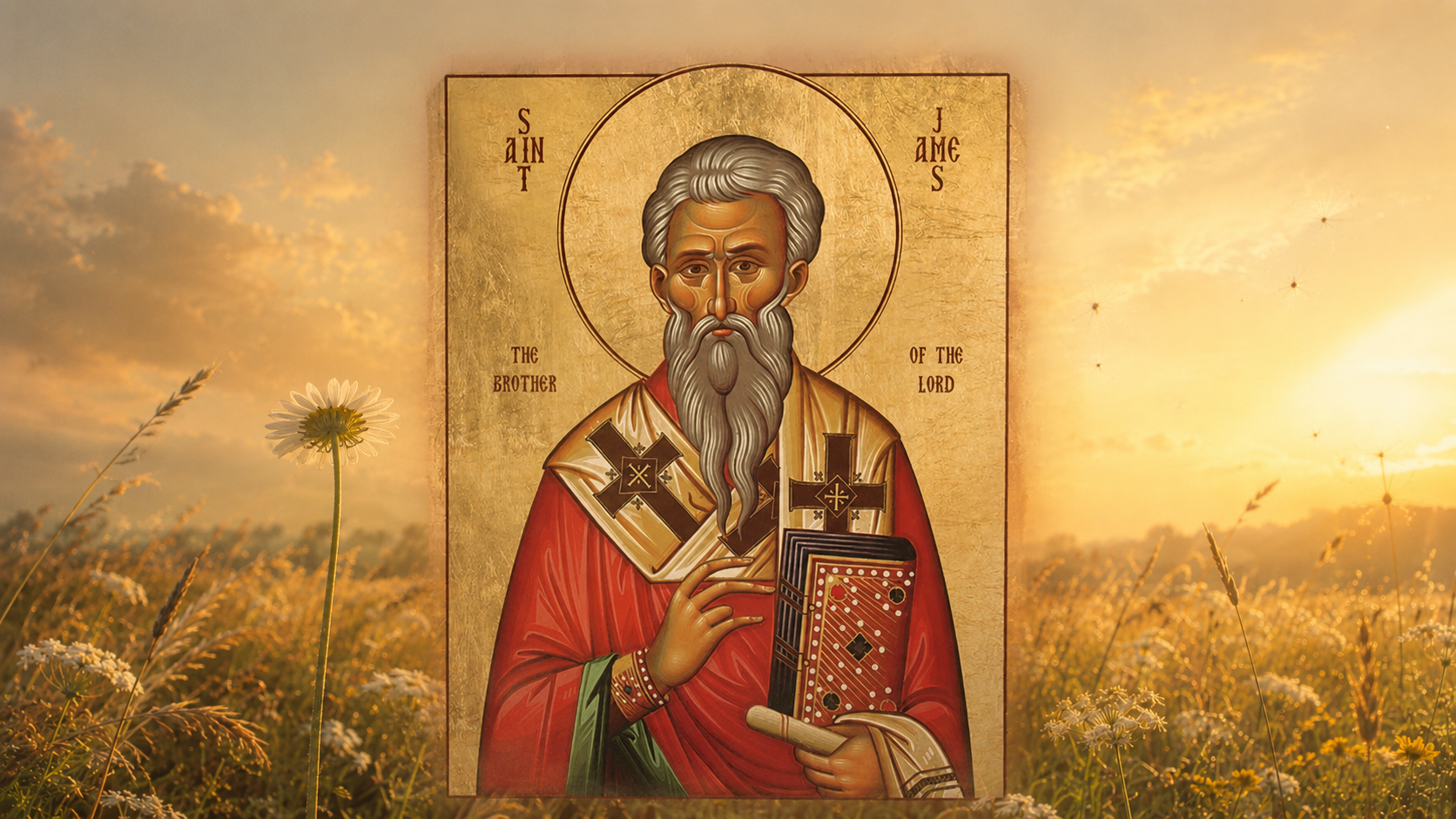
CALL TO WORSHIP | Psalm 119:105-112, MSG
By your words I can see where I’m going; they throw a beam of light on my dark path. I’ve committed myself and I’ll never turn back from living by your righteous order. Everything’s falling apart on me, GOD; put me together again with your Word. Adorn me with your finest sayings, GOD; teach me your holy rules. My life is as close as my own hands, but I don’t forget what you have revealed. The wicked do their best to throw me off track, but I don’t swerve an inch from your course. I inherited your book on living; it’s mine forever – what a gift! And how happy it makes me! I concentrate on doing exactly what you say – I always have and always will.
Song #1 – With Your Likeness by Trinity Grace
Song #2 – God is Love by Chris Renzema
Dismiss Kids
INTRO |
“If any think they are religious and do not bridle their tongues but deceive their hearts, their religion is worthless. Religion that is pure and undefiled before God the Father is this: to care for orphans and widows in their distress and to keep oneself unstained by the world,” (James 1:26-27). These verses ended chapter 1 of James. Not only did they end the first chapter of James however, but they also function as sort of a springboard to the remainder of James. After this verse, in some ways the rest of James seems to be reflections that invite us to both go deeper and practically see pure and undefiled religion in our daily lives as a faith family. James chapter 2 began, as Chaz walked us through, with a warning against favoritism, how favoritism distorts seeing all people rightly, leading us away. And as we walked through last week, James continues chapter 2 by showing us what faith is, a living faith, a transformative journey encompassing every area of our life.
PRE-SERMON READING | James 3:1-12 (NRSV)
Not many of you should become teachers, my brothers and sisters, for you know that we who teach will face stricter judgment. For all of us make many mistakes. Anyone who makes no mistakes in speaking is mature, able to keep the whole body in check with a bridle. If we put bits into the mouths of horses to make them obey us, we guide their whole bodies. Or look at ships: though they are so large and are driven by strong winds, yet they are guided by a very small rudder wherever the will of the pilot directs. So also the tongue is a small member, yet it boasts of great exploits.
How great a forest is set ablaze by such a small fire! And the tongue is a fire. The tongue is placed among our members as a world of iniquity; it stains the whole body, sets on fire the cycle of life, and is itself set on fire by hell. For every species of beast and bird, of reptile and sea creature, can be tamed and has been tamed by the human species, but no one can tame the tongue – a restless evil, full of deadly poison. With it we bless the Lord and Father, and with it we curse people, made in the likeness of God. From the same mouth comes a blessing and a curse. My brothers and sisters, this ought not to be so. Does a spring pour forth from the same opening both fresh and brackish water? Can a fig tree, my brothers and sisters, yield olives or a grapevine figs? No more can salt water yield fresh.
SERMON | Words Through the Word
James 3:1-12
I. Introduction
a. James 1:26-27: “If any think they are religious and do not bridle their tongues but deceiver their hearts, their religion is worthless. Religion that is pure and undefiled before God the Father is this: to care for orphans and widows in their distress and to keep oneself unstained by the world.”
i. These verses are the end of chapter 1, but also the framework for much of James.
ii. Reflections that invite us to both go deeper and more practical.
II. Why do our words matter?
a. Introduction to text
i. Illustration: Watching Michael Phelps as a 10-year old making me want to swim. My mom encouraged me and after about a week I was done.
ii. James makes what at first seems like an abrupt transition from this wonderful meditation on living faith, to a call to not be teachers and tame our tongues?
iii. To understand why, we must understand that words are both prolific, and powerful, we have to understand James’ worldview for why words matter.
iv. To do that, we’re going to start big picture and move practical.
b. James 3:3-5a: “If we put bits into the mouths of horses to make them obey us, we guide their whole bodies. Or look at ships: though they are so large and are driven by strong winds, yet they are guided by a very small rudder wherever the will of the pilot directs. So also the tongue is a small member, yet it boasts of great exploits.”
i. James does not transition to talking of taming the tongue because it’s something we do everyday, but because it’s so powerful.
c. Naturally brings up the question, why do our words matter?
i. Words as foundational to creation:
1.Genesis 1: God spoke things into being.
2. John 1:1-3: “In the beginning was the Word, and the Word was with God, and the Word was God. He was in the beginning with God. All things came into being through him, and without him not one thing came into being.”
3. Now of course, Jesus as the Word, the Logos, means more than just spoken words, it is the revelation of God’s reason and creative order, it’s something our whole life participates in, but also our words.
ii. Words are foundational to our faith journey.
1. James 3:3-4, the analogies are about steering horses or ships, either way, the analogies are about guiding something along the journey.
2.As we remember from last week, for James, faith is a journey.
iii. Words are foundational to our community
1. James 3:5b-6: “How great a forest is set ablaze by such a small fire! And the tongue is a fire. The tongue is placed among our members as a world of iniquity; it stains the whole body, sets on fire the cycle of life, and is itself set on fire by hell.”
2. Tongues as fire, reminds us of the context of James, writing to believers that were likely at Pentecost, and then left and returned home.
3. And at Pentecost what happened? Acts 2:2-4: “And suddenly from heaven there came a sound like the rush of a violent wind, and it filled the entire house where they were sitting. Divided tongues, as of fire, appeared among them, and a tongue rested on each of them. All of them were filled with the Holy Spirit and began to speak in other languages, as the Spirit gave them ability.”
4. The community James is speaking to was formed by tongues of fire from the Holy Spirit.
5. Yet, James twists the image to a negative, hellish fire.
6. Why? Because tongues, which gave power through the Holy Spirit, are now used through the power to divide and raise yourself up.
7. Mirrors when James flipped the Shema into the faith of demons.
8.Why does James call our tongues hellish?
a. James 3:9-10: “With it we bless the Lord and Father, and with it we curse people, made in the likeness of God. From the same mouth comes a blessing and a curse. My brothers and sisters, this ought not to be so.”
b. The hellish tongue is a tongue of fire that was supposed to unite the church being used to curse brothers and sisters.
c.. What does curse mean? Wanting to separate them from God.
d. It’s hellish because of the name of Satan. Literally “ha-satan”, the Hebrew translation for which we get satan means “the accuser.” We see this in Revelation 12:9-10: “The great dragon was thrown down, that ancient serpent, who is called the devil and Satan, the deceiver of the whole world – he was thrown down to the earth, and his angels were thrown down with him. Then I heard a loud voice in heaven proclaiming, ‘Now have come the salvation and the power and the kingdom of our God and the authority of his Messiah, for the accuser of our brothers an sisters has been thrown down, who accuses them day and night before our God.”
iv. Words are foundational to our work
1. James 3:7: “For every species of beast and bird, of reptile and sea creature, can be tamed and has been tamed by the human species.”
2. This seems like a minor point, but New Testament scholars have frequently noticed how the word choice here, both of beast, bird, reptile, sea creature that has been tamed, directly calls back to the creation account in Genesis 1:26, where those four classifications are the classifications of the animals humans are given authority over.
3. Interestingly, in Genesis 2, we see how Adam begins to have dominion over these animals. Genesis 2:19: “So out of the ground the LORD God formed every animal of the field and every bird of the air and brought them to the man to see what he would call them, and whatever the man called every living creature that was its name.”
4. Name in the Bible, is identity-forming, it’s giving an identity. So, as weird as it seems, Adam naming is participating in God’s creation by given an identity, the “dominion” of Genesis 1 is this honoring by giving identity.
5. Our work, as first fruits of creation, involve our words, involve our words participating in The Word.
d. So, I’ve taken us down a perhaps long and convoluted path to make the simple point that you may have already known, words matter a lot. They matter for our community, our work, our faith, and all of creation. The question then becomes, how do we use our words well, or in James’ words, how do we tame our tongues?
III. How do we use our words well?
a. James immediately humbles us in our question. James 3:8: “but no one can tame the tongue – a restless evil, full of deadly poison.”
b. Avoid words for our own elevation:
i. James 3:1-2: “Not many of you should become teachers, my brothers and sisters, for you know that we who teach will face stricter judgment. For all of us make many mistakes. Anyone who makes no mistakes in speaking is mature, able to keep the whole body in check with a bridle.”
ii. We use words to give ourselves authority.
iii. 69 million content creators on Youtube alone.
iv. Words our not for our glorification.
v. James primary concern isn’t who’s teaching, it’s how everyone views their own words.
vi.James’ concern is people seeking a role for their own authority without maturity of knowing the power of words.
vii. The desire for everyone to be teachers leads to division, as each person seeks to use their own words to elevate themselves.
c. Ground in the Word:
i. James 1:18-19: “In fulfillment of his own purpose he gave birth to us by the word of truth, so that we would become a kind of first fruits of his creatures. You must understand this, my beloved brothers and sisters: let everyone be quick to listen, slow to speak, slow to anger.”
ii. We cannot tame our tongues, we can only seek to live through the word of truth.
iii. Are you speaking to God?
iv.Just as we cannot separate our works from our faith, so we cannot separate our tongues from our hearts.
v. Illustration: Chaplaincy, becoming a chaplain that’s present everywhere, not acquiring the skills.
vi. Our words are not about negation but transformation, not about being an introvert but living through God.
d. Notice don’t hide your words
i.James 3:11-12: “Does a spring pour forth from the same opening both fresh and brackish water? Can a fig tree, my brothers and sisters, yield olives or a grapevine figs? No more can salt water yield fresh.”
ii.Notice when your words divide by cursing others or elevating yourself.
iii. And when you notice words that come from a divided heart that are dividing, ask. James 1:6 “But ask in faith, never doubting, for the one who doubts is like a wave of the sea, driven and tossed by the wind.”
IV. Conclusion
a. Our tongues are tongues of fire. They can either be fire of the Spirit, or fire of hell. They can bless and name the life they say, or they can accuse the other before God.
b. The temptation reading these verses is to take it as trite advice, and not a transformational act on the journey.
c. Remember, James’ words on taming the tongue are not meant to stop us from talking, or perpetually holding in our words, that would be our attempt to tame our tongues, which is something James reminds us we cannot actually do.
d. Remember the Psalms, on our journey it is actually quite imperative for us to be honest with our words before God.
e. James is inviting us to recognize the weight of our words, in our work, community, journey, and depend on the Word for transformation through our words.
Communion
When the Word was made flesh, and descended to earth, He did not come down as an accuser of humanity. Rather, he took the accusations of humanity, even becoming a curse, hanging from a tree, when his body was broken, and his blood was poured out for us. Jesus chose not to accuse us, but to give us a name, a name which only He knows, a name in the book of life.
REFLECTION |
What do my words reveal about myself?
How do my words bless other people?
What would tomorrow look like if I grounded my words in my listening to Jesus?
CORPORATE CONFESSION & COMMUNION[1] |
(Celebrant)
The table is ready,
here waiting for your arrival.
It is the table of company with Jesus,
and all who love him.
It is the table of sharing,
with the poor of the world,
with who Jesus identified himself.
It is the table of communion with the earth
in which Christ became incarnate.
So come to this table,
you have much faith
and you who would like to have more;
you who have been here often
and you who have not been for a long time;
and you who have tried to follow Jesus,
and you who have failed;
come.
It is Christ who invites us to meet him here; on the day made for us, at the table he prepared for us.
Invite People to the Table to Receive the Communion elements
(ALL)
Loving God,
through your goodness
we have this bread and juice to offer
which has come forth from the earth
and human hands have made.
May we know your presence
in this sharing,
so that we may know your touch
and presence in all things.
We celebrate the life that Jesus has shared
among his family of faith through the centuries,
and shares with us now.
Made one in Christ
and one with each other,
we offer these gifts
and with them ourselves,
a single living act of praise.
Amen.
Song #3 – Love Divine by Ben Cantelone
Song #4 – Mystery by Charlie Hall
BENEDICTION | Philippians 2:12-16
As we rest in the day made for us, we prepare to enter into the work for which we are made [LIGHT THE CANDLE], remembering…
Therefore, my beloved, just as you have always obeyed me, not only in my presence but much more now in my absence, work on your own salvation with fear and trembling, for it is God who is at work in you, enabling you both to will and to work for his good pleasure.
Do all things without murmuring and arguing, so that you may be blameless and innocent, children of God without blemish in the midst of a crooked and perverse generation, in which you shine like stars in the world, holding forth the word of life so that I can boast on the day of Christ that I did not run in vain or labor in vain.
[1] Adapted from Common Prayer: a liturgy for ordinary radicals, 564.