
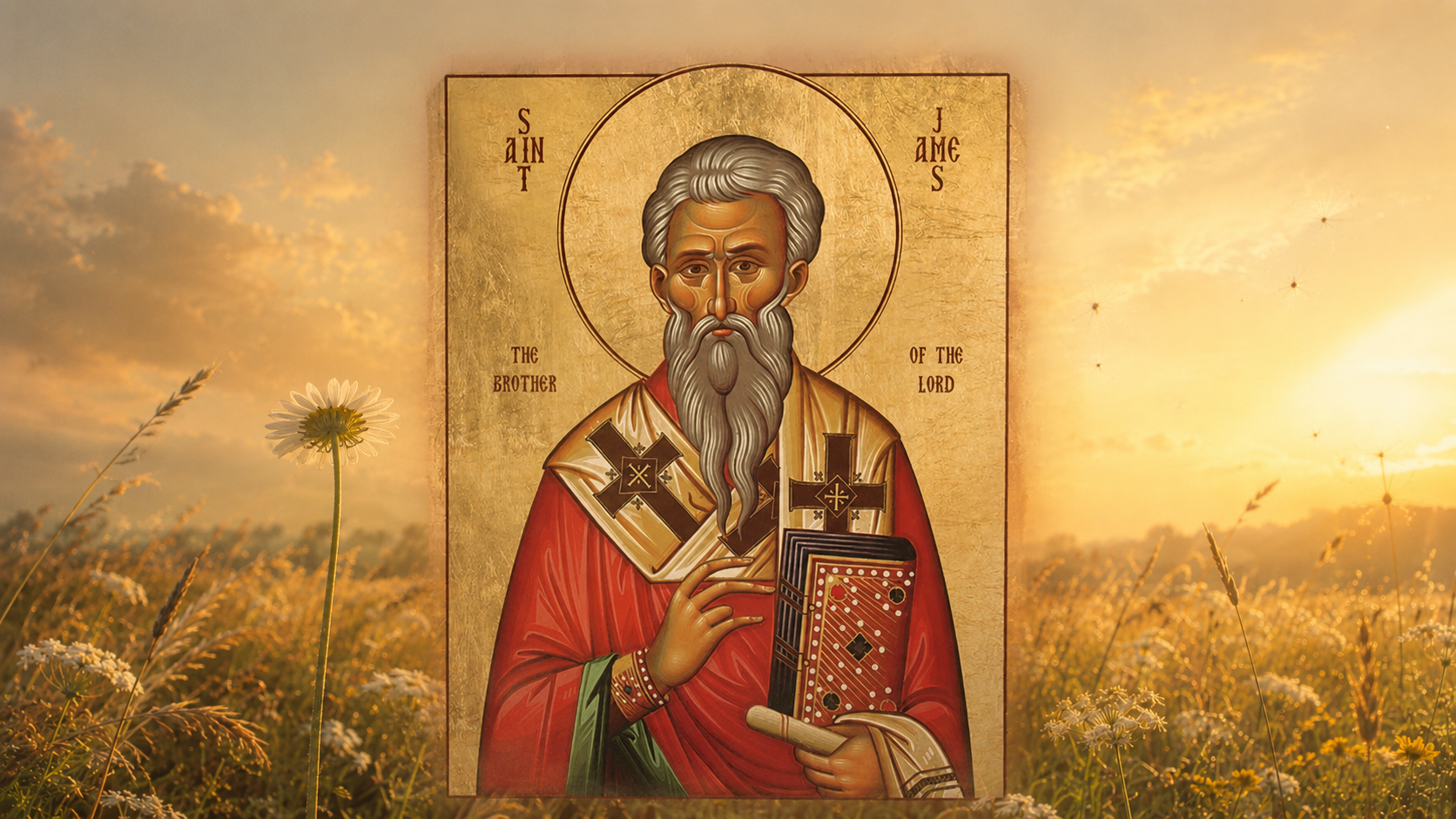
CALL TO WORSHIP | Psalm 37:1-11 (MSG)
Don’t bother your head with braggarts or wish you could succeed like the wicked. In no time they’ll shrivel like grass clippings and wilt like cut flowers in the sun. Get insurance with God and do a good deed, settle down and stick to your last. Keep company with God, get in on the best. Open up before God, keep nothing back; he’ll do whatever needs to be done: He’ll validate your life in the clear light of day and stamp you with approval at high noon. Quiet down before God, be prayerful before him. Don’t bother with those who climb the ladder, who elbow their way to the top. Bridle your anger, trash your wrath, cool your pipes—it only makes things worse. Before long the crooks will be bankrupt; God-investors will soon own the store. Before you know it, the wicked will have had it; you’ll stare at his once famous place and—nothing! The meek shall inherit the land and delight themselves in the abundance of peace.
Song #1 - God Be by Chris Renzema
Song #2 - Great I Am by Leslie Jordan
Dismiss Kids
INTRO |
Why does James write his letter? Do you remember? In light of the letter’s context, history, and structure, it seems to me that James writes to elucidate the process of maturation at work within his brothers and sisters. A process we likened to the fun word thigmomorphogenesis, the process in which plants’ internal reactions to external stimuli produce observable changes that benefit their longevity and fruitfulness. Similarly, James brings to light that through the stimuli of life, the daily difficulties of the environment, and the internal tensions that ever manifest, something is at work within us, reacting to these stimuli by strengthening and changing us so that we might persevere to our purposed and fruitful end.
Of course, the process of maturation is nothing less than a life of faith, faith in the God of history, seen, known, imaged, and whom we live like in the Lord Jesus Christ. We not only come to life in faith in Jesus, but through faith reach the end, the purpose of this life and life forever.
Faith, claims James, is not a passive affirmation but an active agent. Faith, in other words, works; it does a work within us, and so James writes to encourage his faith family and ours to work with faith at work and to participate in the work faith is doing within us. And so, like a good farmer, working with the nature of the seeds and budding plants amid environmental pressures and timing, cultivate a purposeful and fruitful harvest in our lives together in Christ.
James knows, as do we, I think, that while there is inevitability to what the implanted word…of truth will produce, for indeed within this seed is all that life is, can be, and will be. Still, there are ways in which we starve, stone, and strangle the work of faith. Ways in which we react to stimuli without and tensions within. Ways in which we see, act toward, and speak to the other and to ourselves, which either suffocate the activity of faith within or supplement it, bringing it to flourishing.
It is James’ practical ways of participating in the work of faith, faith at work within us, that makes James a book of wisdom. For wisdom is not merely the knowledge of the what, how, and why; but the character and aptitude to submit to such knowledge, letting it give shape to our very actions, attitudes, and affections. Wisdom, true wisdom, and, as we will see today, “wisdom from above,” is always living, ever active, or else it is at best mere information, or at worst, every degrading.
So, let us enter our text today, seeking wisdom. Doing what James encouraged us to do at the beginning of his letter,
“If any of you lacks wisdom, let him ask God, who gives generously to all without reproach, and it will be given him.” (James 1:5).
Pray with me as ___________ comes to read James 3:13-18 for us today.
PRE-SERMON READING | James 3:13-18 (ESV)
Who is wise and understanding among you? By his good conduct let him show his works in the meekness of wisdom. But if you have bitter jealousy and selfish ambition in your hearts, do not boast and be false to the truth. This is not the wisdom that comes down from above, but is earthly, unspiritual, demonic. For where jealousy and selfish ambition exist, there will be disorder and every vile practice. But the wisdom from above is first pure, then peaceable, gentle, open to reason, full of mercy and good fruits, impartial and sincere. And a harvest of righteousness is sown in peace by those who make peace.
SERMON | Evidently Wise
Any honest reading of James leaves one feeling a bit sore. James does not pull his punches. While the force behind his blows is genuine love and familial affection for “my beloved brothers and sisters” (1:19), the speed and acute accuracy of his jabs often leave one breathless. One can only block so many shots before a blow lands, and we are bent over, if not laid flat, by the weight of James's straightforward conviction about what is true and, likewise, what is not.
Today’s thrust carries that same loving force behind it. A force meant to knock the breath out of us, so that the Breath of Life might fill our lungs.
“Who is wise and understanding among you?” (James 3:13)
Hear again the scrutinizing question: “Who is wise and understanding among you?”
How do we know that we (and others) are living wisely? That the way we see and thus react to the situations we find ourselves emeshed in, the people we find ourselves entangled with, and even the person we are and are inescapably becoming within, is truly right and good? James’ question is rhetorical only in the sense that he is not looking for a name but for a defense, evidence of wisdom.
Let me say at the outset that if you have not asked yourself the question, “Am I wise and understanding?” and have never (or only on the rarest occasions) considered whether and how your vision of a situation, a person, or yourself, and consequently your response, was not only factually accurate but also wise, seeing the true and whole picture and responding in accordance, then you are not living wisely. You cannot be wise, and so live wisely, if you are not seeking wisdom, looking for wisdom, and doing so with the proper disposition. That’s what James says, anyway:
“By his good conduct (his right actions that lead to the good) let him show his work in the meekness of wisdom.” (3:13)
Meekness is a word we’ve encountered before in James’ letter. He mentioned it earlier in chapter 1. After exhorting those “brought forth by the word of truth… [to] be a kind of firstfruits of his creatures” (1:18), who are “quick to hear, slow to speak, slow to anger” (1:19), he says,
“Therefore put away all filthiness and rampant wickedness and receive with meekness the implanted word, which is able to save your souls.” (1:21)
Remember how we described the same word when Jesus used it in his exhortation to share his heart in our daily labors during our Sabbath & Work series? We said the meek are those who know when to be angry and when not to be, and when to speak up and when not to. The meek are not volatile but stable, possessing prudence with a disposition toward patience and forgiveness. The meek are prone to patience, compassion, and forgiveness, even when actively standing against what is wrong and for what is true, because they understand that they exist only because this is indeed the disposition of the Creator and Sustainer of their souls.
So, as those who know who accurately know who they are and whose they are, and know who and how the One to whom they belong is and how that One acts toward them and others, the meek will always ask (hear/listen) before they act. It is not enough to seek what is factually accurate; it is the disposition with which we do so that matters, that makes our living wise or not. We see this borne out in what James says next.
Let’s keep reading…stopping to expand a bit on what James is alluding to with his choice of words.
“But if you have bitter jealousy (envy) and selfish ambition* (partisanship or self-interested rivalry) in your hearts, do not boast (proclaim yourself justified and validated) and be false to the truth (ironically, be factually accurate but actually wrong). This is not wisdom that comes down from above (i.e., wisdom outside of the self, not of the self, and thus eternal), but is earthly (common to humanity, temporal), unspiritual (oriented to the soul without Spirit), demonic (of the devil – 4:4-7). For where jealousy (envy) and selfish ambition (partisan zeal) exist, there will be disorder (instability or confusion) and every vile practice (evil thing).” (3:14-16)
Unexamined understanding (seeing) and acting (re-acting), even if it gets something correct, will always be wrong, leading not to the Good but to disorder at the very least and, ultimately, to the antithesis of the Good, evil. For as James has already made explicit:
“…and sin (living that misses the mark) when it is fully grown brings forth death” (1:15).
So, again, the question is: how do we know whether we are living wisely? Negatively answered, if our sight and actions contribute to disorder (instability or confusion) in our relations to the world, others, and ourselves, then we are not building our house on the wisdom of Christ, that sure foundation, but on a sandy bottom that will be washed away when the weather changes (Matthew 7:24-27). It’s as simple as that.
Still, as we know, we are not always good at distinguishing the source of the difficulties in our existence. So, is there a positive way to discern whether we are indeed participating rightly in the work of faith within us, that is, living wisely? Well, yes, says James.
“But the wisdom from above is first pure (examined – 1:19-21), then peacable** (“doers of the word “ (1:22) - oriented toward peace), gentle (equitable; "gentle" in the sense of truly fair by relaxing overly strict standards in order to keep the "spirit of the law"1), open to reason (The word (eupeithēs; its only NT occurrence) means, literally, “easily persuaded.” What is meant is not a weak, credulous gullibility, but a willing deference to others when unalterable theological or moral principles are not involved.2). full of mercy (2:13) and good fruits (1:17-18), impartial (2:1-12) and sincere (without hypocrisy or double-mindedness (1:8) or double-tonguedness (3:9-12)). (James 3:17)
What is the evidence of wisdom, that someone is living evidently wise? What is “the good conduct” that “shows” congruency between what is known and what is lived, between what is real (true) and noticeably shaped to that reality (truth)? Such a person seeks wisdom with a meek disposition, not hiding from themselves or from God the motivations of their heart (i.e., one who first listens). And having listened, acts in accordance with the nature of Wisdom Himself. Such a person and such a life experience, says James,
And a harvest of righteousness is sown in peace by those who make (author) peace.” (3:18)
Notice the last phrase. The harvest of right living, which comes from living wisely, is the product of peace sown (the work of the One who implanted the seed in the first place) in harmonious partnership with the ones (plural) who author peace. If our way of living authors peace, then we are wise and understanding. If not, perhaps we need to stop and listen.
If we are wise and spiritual, we are authors of peace… ones who relate rightly with God, others, the earth, and ourselves, and whose right relating is the product of “a deliberate preference for peace” (God’s toward us and us towards others), not merely an internal feeling of being at peace, but an actual, experiential and “communal reality grounded in God’s character and promises.” For indeed, this is the fruit, the evidence of faith at work within us.
So, who is wise and understanding among us? Let us take a few minutes to listen before we answer.
“selfish ambition” – “The only attested pre-NT occurrence of the word comes in Aristotle, who uses it to describe the narrow partisan zeal of factional, greedy politicians in his own day.”3
“The word translated “peaceable” speaks of that which actively works for harmonious relationships, wholeness, and reconciliation. It conveys more than the absence of conflict; it points to a positive disposition that welcomes righteousness and mutual well-being. Rooted in the biblical concept of shalom, it embraces integrity, spiritual health, and right standing with God and others.”4
REFLECTION |
Where do envy and self-interest exist within my heart?
Am I authoring peace in my roles, responsibilities, and relationships? How or why not?
What would tomorrow look like if I responded wisely to faith at work within me?
CORPORATE CONFESSION & COMMUNION5 |
(Celebrant)
The table is ready,
here waiting for your arrival.
It is the table of company with Jesus,
and all who love him.
It is the table of sharing,
with the poor of the world,
with who Jesus identified himself.
It is the table of communion with the earth
in which Christ became incarnate.
So come to this table,
you have much faith
and you who would like to have more;
you who have been here often
and you who have not been for a long time;
and you who have tried to follow Jesus,
and you who have failed;
come.
It is Christ who invites us to meet him here; on the day made for us, at the table he prepared for us.
Invite People to the Table to Receive the Communion elements
(ALL)
Loving God,
through your goodness
we have this bread and juice to offer
which has come forth from the earth
and human hands have made.
May we know your presence
in this sharing,
so that we may know your touch
and presence in all things.
We celebrate the life that Jesus has shared
among his family of faith through the centuries,
and shares with us now.
Made one in Christ
and one with each other,
we offer these gifts
and with them ourselves,
a single living act of praise.
Amen.
Song #3 - Heaven on Earth by Eauclaire
Song #4 - Neighborheart by Citizens
BENEDICTION | James 5:7-8
As we rest in the day made for us, we prepare to enter into the work for which we are made [LIGHT THE CANDLE], remembering to…
Be patient, therefore, brothers and sisters, until the coming of the Lord.
See how the farmer waits for the precious fruit of the earth, being patient about it, until it receives the early and the late rains.
You also, be patient.
Establish your hearts, for the coming of the Lord is at hand.
1. https://biblehub.com/greek/1933.htm↩︎
2. Douglas Moo, The Letter of James, The Pillar New Testament Commentary, 176.↩︎
3. Douglas Moo, The Letter of James, The Pillar New Testament Commentary, 171.↩︎
4. https://biblehub.com/greek/1516.htm↩︎
5. Adapted from Common Prayer: a liturgy for ordinary radicals, 564.↩︎