
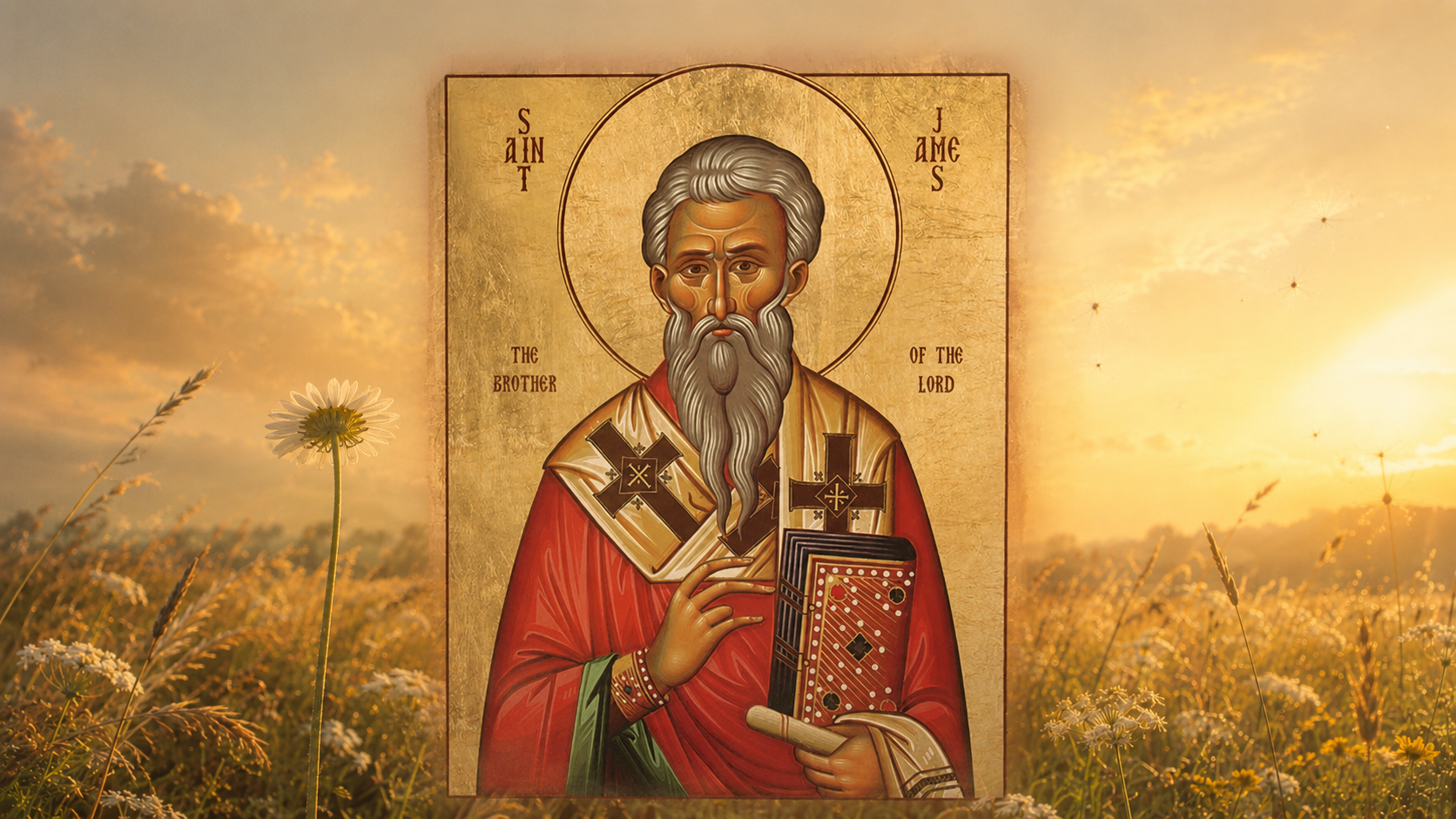
CALL TO WORSHIP | Psalm 107:1-9,42-43
Oh, thank GOD – he’s so good! His love never runs out. All of you set free by GOD, tell the world! Tell how he freed you from oppression, then rounded you up from all over the place, from the four winds, from the seven seas.
Some of you wandered for years in the desert, looking but not finding a good place to live, half-starved and parched with thirst, staggering and stumbling, on the brink of exhaustion. Then, in your desperate condition, you called out to GOD. He got you out in the nick of time; He put your feet on a wonderful road that took you straight to a good place to live. So thank GOD for his marvelous love, for his miracle mercy to the children he loves. He poured great drafts of water down parched throats; the starved and hungry got plenty to eat.
Good people see this an are glad; bad people are speechless, stopped in their tracks. If you are really wise, you’ll think this over – it’s time you appreciated GOD’s deep love.
Song #1 – You are With Me by Leslie Jordan
Song #2 – Have You Found the Lord? By The Porter’s Gate
Dismiss Kids
INTRO |
As Jeremy said early in this series, the book of James has had a more controversial reception as a book in the Bible than most of the other letters and books in the New Testament. The main reason for this, at least during the time of the Protestant Reformation, seems to be James 2:14-26, which we’ll go through today. When describing this section, New Testament scholar Douglas Moo says, “the most famous, controversial and important contribution of James to theology comes in his teaching about the relationship of faith, works and justification in 2:14-26.”[1]
I bring this up to make you aware that this passage has been difficult for many followers of Jesus, especially Protestants, for a long time. I do not bring this up to make you doubt the passage, personally I find this passage, and the whole epistle of James inspiring, illuminating, and consistent with the message of Scripture found in Jesus’ teachings in the Gospels and Paul’s letters. Yet I still bring up the difficulty of the passage to many historical Christians such as Martin Luther, to remind you that it’s ok, to have a strong reaction to these verses, even an initial aversion. And while we’ll go through the text, hopefully in a way that satisfies any initial misgivings you may have, I want to encourage you to wrestle with the text, not to write it off, and to let the Scriptures draw you deeper to persevere through its meaning and ultimately find yourself closer to Jesus. All of us, inevitably, will encounter difficult passages in Scripture, even if this passage is not difficult to you, if we didn’t then we wouldn’t need it to grow closer to God. So this felt like a good time to remind us all, that when we encounter difficult Scriptures, which we inevitably will, allow it to challenge you, offend you, upset you, and wrestle with it, allowing the difficulty to deepen your relationship with Jesus, which after all is why you’re reading the Scriptures in the first place. The Bible Project reminds us that the Scriptures, especially a letter like James full of short wisdom statements, and lacking explanations, is meditation literature, not written like a Marvel movie where everything is explained while you go, but written to force you to wrestle, to pray and meditate, to spend time with the Lord to allow the fullness of the text to sink in, to transform, to shape.
So, with that context in mind, let me pray for us, and as I pray I’ll invite ___________ to come up and read James 2:14-26 for us.
PRE-SERMON READING | James 2:14-26 (NRSV)
What good is it, my brothers and sisters, if someone claims to have faith but does not have works? Surely that faith cannot save, can it? If a brother or sister is naked and lacks daily food and one of you says to them, “Go in peace; keep warm and eat your fill,” and yet you do not supply their bodily needs, what is the good of that? So faith by itself, if it has no works, is dead.
But someone will say, “You have faith, and I have works.” Show me your faith apart from works, and I by my works will show you faith. You believe that God is one; you do well. Even the demons believe – and shudder. Do you want to be shown, you foolish person, that faith apart from works is worthless? Was not our ancestor Abraham justified by works when he offered his son Isaac on the altar? You see that faith was active along with his works, and by works faith was brought to completion. Thus the scripture was fulfilled that says, “Abraham believed God, and it was reckoned to him as righteousness,” and he was called the friend of God. You see that a person is justified by works and not by faith alone. Likewise, was not Rahab the prostitute also justified by works when she welcomed the messengers and sent them out by another road? For just as the body without the spirit is dead, so faith without works is also dead.
SERMON | How We Respond to Faith
I remember in elementary school going white water rafting for the first time one summer. I was so excited, I couldn’t wait to get started, and then the guides led us through the legal warnings they have to give. I don’t really remember what they said, but it amounted to basically what to do if everything went as bad as possible, what to do if someone drowned, if you were drowning, if you fell and couldn’t get back on the raft, etc. And all the sudden I was terrified to go. And then the trip was amazing and nothing bad happened. I hope my warnings of the text were like that for you, and then _________ read the verses and you feel like it wasn’t that tough at all. Either way though, let’s dive in to what James is saying here. As we go through these verses, I want to ground ourselves in the question James seems to be answering: what is faith? And why?
Self-Justifying Faith
To begin our verses, James seems to be answering what faith is in the negative, by describing what it is not. Starting in verse 14 we read, “what good is it, my brothers and sisters, if someone claims to have faith but does not have works? Surely that faith cannot save, can it? If a brother or sister is naked and lacks daily food and one of you says to them, ‘Go in peace; keep warm and eat your fill,’ and yet you do not supply their bodily needs, what is the good of that? So faith by itself, if it has no works, is dead,” (James 2:14-17). So James tells us, both at the beginning in verse 14, and at the end of the paragraph in verse 17, that faith without works is of no good, or dead, and sandwiched in the middle of these proclamations is verses 15 and 16 which are a pretty obvious example of a faith that is dead. We can say, reading this first paragraph, that dead faith separates from others. While the language that faith without works is dead may be a bit jarring, we also can easily agree with James that this example is not an instance of faith. Looking specifically at the example James gives in verses 15 and 16 [put on screen], we notice that it is a brother or sister that is naked and lacking food. By brother or sister here, James is talking about a member of the community, a member of the faith family, that was ignored. Contextually, it’s critical to note that James had ended chapter 1 by saying, “Religion that is pure and undefiled before God, the Father, is this: to care for orphans and widows in their distress, and to keep oneself unstained by the world,” (James 1:27), and begun chapter 2, as Chaz preached on last week, warning against partiality affecting both the rich and the poor. In many ways, this example, and all our verses really, our building these themes in our passage. With everything we know of the early church, and James’ continual emphasis, it is quite likely that the people James is writing to are poor, struggling to work, facing persecution, and so James uses this example to really drive home the point in a way that would hit very close to home.
This specific example, and James warning against this type of “faith”, actually parallels Jesus’ words in both Matthew and John’s Gospels. In John 13:35, Jesus says, “By this everyone will know that you are my disciples, if you have love for one another,” (John 13:35), and in Matthew 25, as Jesus is in Jerusalem about to be arrested He says, “Then the king will say to those at his right hand, ‘Come, you who are blessed by my Father, inherit the kingdom prepared for you from the foundation of the world, for I was hungry and you gave me food, I was thirsty and you gave me something to drink, I was a stranger and you welcomed me, I was naked an you gave me clothing, I was sick and you took care of me, I was in prison and you visited me.’ Then the righteous will answer him, ‘Lord, when was it that we saw you hungry and gave you food or thirsty and gave you something to drink? And when was it that we saw you a stranger and welcomed you or naked an gave you clothing’... And the king will answer them, ‘Truly I tell you, just as you did it to one of the least of these brothers and sisters of mine, you did it to me,’” (Matthew 25:34-38,40). Of course, immediately after this, we see the same dialogue in reverse, with those whom Jesus did not know not doing these things, and not recognizing Jesus in the people they did not care for. I highlighted all the parallels for you, so I hope you notice how James seems to be drawing directly from Jesus’ words in Matthew for his example.
So, faith is not individual. If we’re following our questions then to ground us, let’s ask why faith is not passive? Well, these words of Jesus provide us the first hint. A passive faith, not loving brother or sister, does not recognize Christ in them. Following what Chaz said last week when James spoke on favoritism, favoritism by its nature dehumanizes people by seeing them as a means to an end and not seeing the fullness of who they are. To put it differently, a passive faith does not recognize “the implanted word [Jesus] that has the power to save your souls,” (James 1:21) in the other. There’s a bit more too though. Notice the question James asks in verse 14. “Surely that faith cannot save, can it?” Here, James adds so much hidden depth. First, that passive “faith” does not save you, because as Jesus says in Matthew 25, He does not know you who ignored His brothers or sisters. But also, that faith cannot save your brother or sister in need. You have not provided for them practically in any way at all. Dallas Willard, in The Divine Conspiracy points out the futility of this “faith”, this way of thinking, when he says, “Can we seriously believe that God would establish a plan for us that essentially bypasses the awesome needs of present human life and leaves human character untouched?”[2] Why is faith not passive? Because it doesn’t make sense, it assumes that believing in a good God has no impact on yourself or your brothers and sisters.
Ok, continuing on in verse 18, “But someone will say, “You have faith, and I have works.” Show me your faith apart from works, and I by my works will show you faith. (James 2:18-20). Zooming into verse 18, we see the second example James gives of a dead faith, when says “you have faith, and I have works.” To understand what’s going on here, it’s helpful to look at the Message translation, which says this, “I can already hear one of you agreeing by saying, ‘Sounds good. You take care of the faith department, I’ll handle the works department.’ Not so fast. You can no more show me your works apart from your faith that I can show you my faith apart from my works. Faith and works, works and faith, fit together hand in glove,” (James 2:18, MSG). If the first faith separates us from others, this faith separates us from ourselves. By separating faith and works, or faith and its fruits, we divide ourselves, we are, as James says in chapter 1, “like those who look at themselves in a mirror; for they look at themselves, and, on going away, immediately forget what they were like,” (James 1:24).
After verse 18, James continues to show the separating ways of this dead faith, saying in verses 19 and 20, “You believe that God is one; you do well. Even the demons believe – and shudder. Do you want to be shown, you foolish person, that faith apart from works is worthless?” (James 2:19-20). Finally, or better yet inevitably, the dead faith that has separated one from others and themself, separates them from God. Faith is not a mere intellectual belief. James here is referencing part of the Shema. The Shema, for those who may not know, is a Jewish “confession of the uniqueness of God… a confession of basic doctrine that the Jewish people recited twice daily.”[3] This confession, which is as true for us today, comes from Deuteronomy 6:4 which says, “Hear, O Israel: the LORD is our God, the LORD is one.” James is taking what is the most sacred of Jewish beliefs, one recited twice daily, and saying that confession, if it remains a mere intellectual belief, is no better than the faith of the demons. In fact, it’s actually worse. As James says, at least the demons have a response to this intellectual belief… a shudder.
In verse 20, we then see a subtle reason why this type of dead faith, as destructive as it is, can be so attractive. Specifically, James calls this person, “you foolish person.” While a thesarus today would associate “foolish” with synonyms like silly, naïve, or dumb, in antiquity foolish was much more severe a term, denoting someone who, as one commentator puts it, “probably suggests deficiency in understanding as well as moral perversity.”[4] Foolish, in this context, means someone who willfully rejects understanding, reality to engage in immorality. With this final critique, James empathically exclaims that “he is not simply challenging this person to give evidence for his or her faith; he is suggesting that the faith the objector claims to have is not faith at all.”[5] Ultimately, this dead faith that separates from others, self, and God is not faith, but rather a claim to faith that provides self-justification for living as you see fit and assuming that you are right with God. This reminds me of another claim by Dallas Willard, he says that “our usual ‘gospels’ are, in their effects – dare we say it – nothing less than a standing invitation to omit God from the course of our daily existence.”[6]
Living Faith
So, if James has spent so much time picking apart what faith is not, we are then left to ask what is faith? James transitions to two examples: Abraham and Rahab. In verse 21 he says, “Was not our ancestor Abraham justified by works when he offered his son Isaac on the altar? You see that faith was active along with his works, and by works faith was brought to completion. Thus the scripture was fulfilled that says, ‘Abraham believed God, and it was reckoned to him as righteousness,’ and he was called the friend of God. You see that a person is justified by works and not by faith alone,” (James 2:21-24). Ok, so there’s a lot to unpack here. First, we can feel the tension of verse 24, where James says a person is justified by works and not by faith alone, which at first glance seems to directly counter Paul who says in Romans, “We hold that a person is justified by faith apart from works prescribed by the law,” (Romans 3:28). I will point out, that Romans 3:28 says “works prescribed by the law”, which is a big difference in the passages to me, but that will take us down a rabbit hole all day. So, how do James and Paul exist together? I think the immediate contexts of verse 24, and specifically the story of Abraham which James cites, can help us see how they are not in opposition.
To unpack James’ allusions to Abraham, we have to go back to Genesis. James does an interesting thing here, he retells the story of God providing a substitute sacrifice for Isaac, which occurs in Genesis 22. And James, looking at verse 22, cites that story, as this moment where Abraham’s faith was brought to completion. In verse 23 then James says “Thus the scripture was fulfilled that says, ‘Abraham believed God, and it was reckoned to him as righteousness.’” What’s so fascinating here, is James directly cites Genesis 15:6. Now, Genesis 15 is a chapter most of our translations have titled “God’s Covenant with Abram,” and what happens is God makes a promise to Abram that Abram believes, leading to the scripture saying “it was reckoned to him as righteousness”, and then God puts Abram to sleep and fulfills the covenant He is making with Abram all by Himself. What we have in Genesis 15 is a typical covenant ritual between two parties, where typically both parties make a covenant that they both agree to uphold signified by the two parties walking through the altar together. However, in Genesis 15, instead what happens is “as the sun was going down, a deep sleep fell upon Abram, and a deep and terrifying darkness descended upon him… When the sun had gone down and it was dark, a smoking fire pot and a flaming torch passed between these pieces. On that day the LORD made a convenat with Abram,” (Genesis 15:12,17-18a). So, based directly on what James alludes to in Genesis, we see this progression where God declares Abram righteous, makes a covenant with Abram without Abram’s participation as the foundation for Abram being declared righteous. And then, seven chapters later, after disobeying God by sleeping with Hagar to have Ishmael, Abraham finally has the promised son, Isaac, and willingly offers him up to God. This is why James says that the work of offering Isaac brought Abraham’s faith to completion. It did not make Abraham righteous, it did not justify him, that was God’s covenant, but it did bring his faith to fullness.
So, why go through all that? First, it reveals how James and Paul are not in opposition. But second, it reveals what faith is to us. We see that faith is not perfection, but a continually transforming journey of moving closer towards Christ, that will eventually result in fullness. After Abram was reckoned righteous, he immediately tries to bring about God’s promise on his own terms with Ishmael and Hagar, a tragic story of Abram’s failures. As Eugene Peterson puts it, faith is an “obedience in a long direction.” James then, is not saying works in and of themselves justify us before God. Rather, that works are an inevitable part of a holistic faith, an undivided faith of the transformative journey of faith that comes from moving towards Christ, of “welcoming with meekness the implanted word [Christ] that has the power to save your souls,” (James 1:21).
This theme continues with a second example, Rahab, a gentile woman who knew nothing of God, had no records of speaking with God before in the Scriptures, a woman who in many ways seems the opposite of Abraham. And yet, “Likewise, was not Rahab the prostitute also justified by works when she welcomed the messengers and sent them out by another road?” (James 2:25). Rahab, with her whole being moved towards God, and showed her faith through her work. James ends by concluding his point, “for just as the boy without the spirit is dead, so faith without works is also dead,” (James 2:26). Again, I’ll turn to the Message to help elucidate this point. The message concludes the chapter by saying, “the same with Rahab, the Jericho harlot. Wasn’t her action in hiding God’s spies and helping them escape – that seamless unity of believing and doing – what counted with God? The very moment you separate body and spirit, you end up with a corpse. Separate faith and works and you get the same thing: a corpse,” (James 2:25-26, MSG).
So, where do we go from here? As we’ll continue in James 3, we’ll get to look at how James defines “works” more closely. But for now, let’s return to our original question, what is faith? These verses reveal to me, that so often we unintentionally, or intentionally, minimize faith. We make faith a belief separate from actions, a slogan separating us from people, a piece of us that can be divided. And we do so, whether we realize it or not, so we can go about our lives as we want to, with some sort of eternal trump card that’ll make everything alright in the end. The tragedy of that however, is it misses how beautiful faith is. It misses that faith is living through Christ, the seed planted in us. It misses that faith is a journey, drawing us into seeing each other rightly, seeing God more fully, and seeing ourselves through the law of freedom. It is a faith that works, a faith that participates in, through and with “the word of truth, so that we would become a kind of first fruits of his creatures,” (James 1:18), participates in the new creation. So, with that, there’s going to be three reflection questions on the screen. I’ll give you three minutes to consider them, to spur on your meditations this week. Let me pray for us, and then take a moment to reflect on the full picture of faith James offers us.
REFLECTION |
What areas of my life have I separated from my faith?
What are some of the works/fruits of my faith that God is doing through me in my community?
What would tomorrow look like if I responded in my work through the fullness of faith?
CORPORATE CONFESSION & COMMUNION[7] |
(Celebrant)
The table is ready,
here waiting for your arrival.
It is the table of company with Jesus,
and all who love him.
It is the table of sharing,
with the poor of the world,
with who Jesus identified himself.
It is the table of communion with the earth
in which Christ became incarnate.
So come to this table,
you have much faith
and you who would like to have more;
you who have been here often
and you who have not been for a long time;
and you who have tried to follow Jesus,
and you who have failed;
come.
It is Christ who invites us to meet him here; on the day made for us, at the table he prepared for us.
Invite People to the Table to Receive the Communion elements
(ALL)
Loving God,
through your goodness
we have this bread and juice to offer
which has come forth from the earth
and human hands have made.
May we know your presence
in this sharing,
so that we may know your touch
and presence in all things.
We celebrate the life that Jesus has shared
among his family of faith through the centuries,
and shares with us now.
Made one in Christ
and one with each other,
we offer these gifts
and with them ourselves,
a single living act of praise.
Amen.
Song #3 – Jesus Is by PaperHorses
Song #4 – The Gospel is All that I Have by Nathan Partain
BENEDICTION | Philippians 2:12-13
As we rest in the day made for us, we prepare to enter into the work for which we are made [LIGHT THE CANDLE], remembering…
Therefore, my beloved, just as you have always obeyed me, not only in my presence but much more now in my absence, work on your own salvation with fear and trembling, for it is God who is at work in you, enabling you both to will and to work for his good pleasure.
[1] Douglas Moo, James: An Introduction and Commentary, Tyndale New Testament Commentaries Vol. 16 (Downers Grove: InterVarsity Press, 2015), 59.
[2] Dallas Willard, 46.
[3] Douglas Moo, James: An Introduction and Commentary, 139.
[4] Douglas Moo, James: An Introduction and Commentary, 140.
[5] Douglas Moo, James: An Introduction and Commentary, 139.
[6] Willard, 19.
[7] Adapted from Common Prayer: a liturgy for ordinary radicals, 564.