
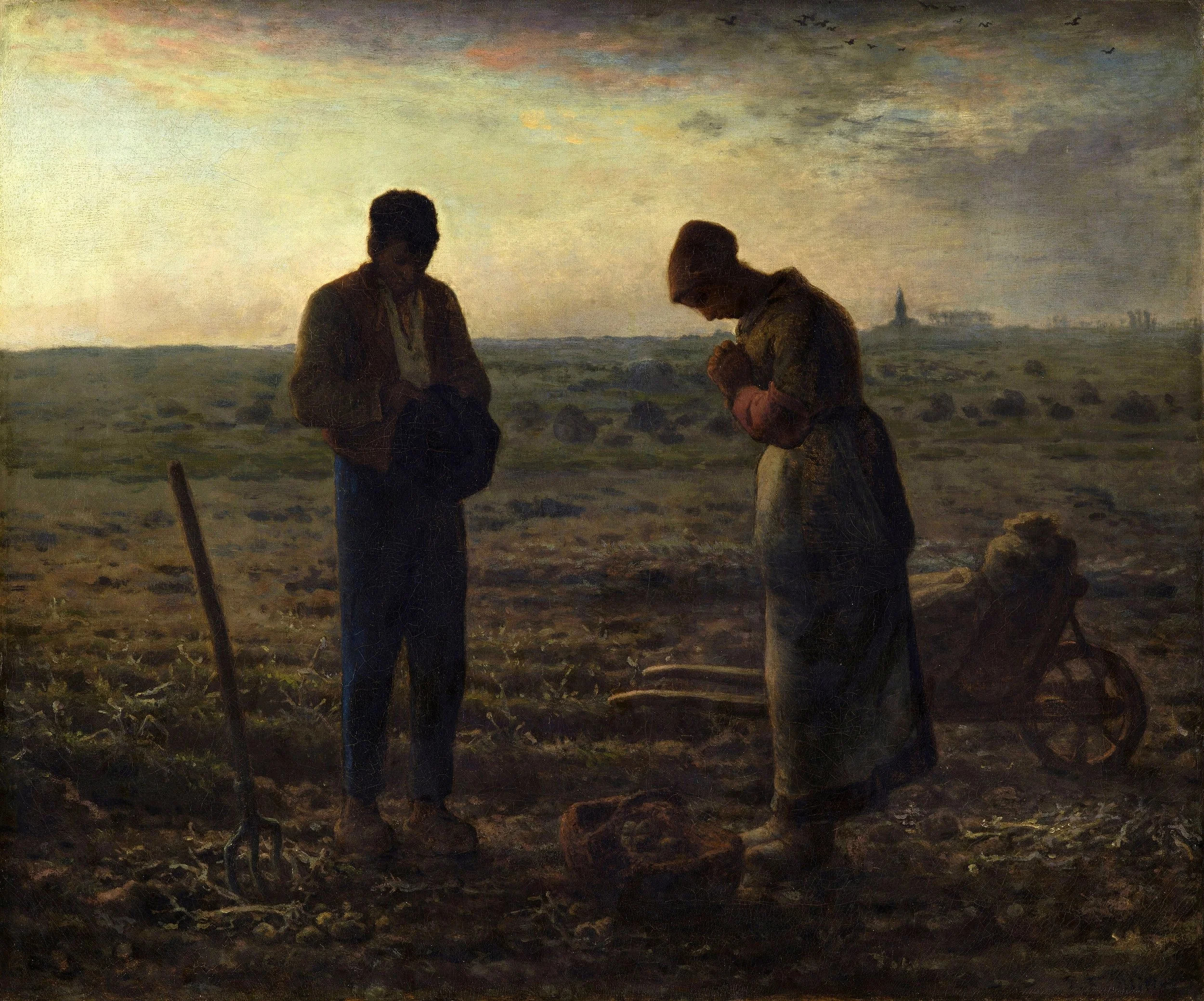
A Rested Soul

Matthew 11:25-30; Psalm 40:1-8; Romans 12:1-2; John 14:31; Colossians 3:23
Jeremy Pace
 

WELCOME

CALL TO WORSHIP | Psalm 40:1-8

I waited patiently for the Lord; he inclined to me and heard my cry. He drew me up from the pit of destruction, out of the miry bog, and set my feet upon a rock, making my steps secure. He put a new song in my mouth, a song of praise to our God. Many will see and fear, and put their trust in the Lord. Blessed is the man who makes the Lord his trust, who does not turn to the proud, to those who go astray after a lie! You have multiplied, O Lord my God, your wondrous deeds and your thoughts toward us; none can compare with you! I will proclaim and tell of them, yet they are more than can be told. In sacrifice and offering you have not delighted, but you have given me an open ear. Burnt offering and sin offering you have not required. Then I said, “Behold, I have come; in the scroll of the book it is written of me: I delight to do your will, O my God; your law is within my heart.”

Song #1 – Psalm 34 by Shane and Shane

Song #2 – His Glory and My Good by CityAlight

Dismiss Kids

INTRO |

We, on this side of the cross and resurrection, having been buried with Christ Jesus in his death, are, like the psalmist, “drawn up from the pit of destruction, out of the miry bog and” had our “feet [set] upon a rock, making [our] steps secure” (Ps. 40:2). Indeed, after Easter, we have “a new song in our mouths” (Ps. 40:3).  A melody that draws us into rhythmic life with God. Life of Sabbathing into work and working into Sabbath.

Indeed, it is living instep with this whole and holy rhythm which is not only our good, but the expectation of the life of faithful: “Blessed is the man who makes the LORD his trust, “ (Ps. 40:4) who’s “delight [is] to do your will, O my God; your law is within my heart.” (Ps. 40:8).

David’s psalm foreshadows the “wonderous deeds and thoughts [of God] toward us” (Ps. 40:5) still to come. Thoughts revealed through the mouth and writings of the prophet, Jeremiah:

“Behold, the days are coming, declares the LORD, when I will make a new covenant… not like the covenant that I made… when I took them by the hand out of Egypt… But this is the covenant that I will make… I will put my law within them, and I will write it on their hearts… For I will forgive their iniquity, and I will remember their sin no more.” (Jeremiah 31:31-34)

Thoughts that looked forward to the wonderful deed through which our iniquity was forgiven, the deed that ensured our sins are no longer remembered. The deed which we remember each week:

“And Jesus took the bread, and when he had given thanks, he broke it and gave it to them, saying, ‘This is my body, which is given for you. Do this in remembrance of me.’ And likewise the cup after they had eaten, saying, ‘This cup that is poured out for you is the new covenant in my blood.’” (Luke 22:19-20)

A deed that made it possible for us to live a life like Jesus with His law within us, written our hearts. On the evening of the first Easter day,

“Jesus said to his disciples again, ‘Peace be with you. As the Father has sent me, even so I am sending you.’ And when he had said this, he breathed on them and said to them, ‘Receive the Holy Spirit.’” (John 20:21-22)

These are the deeds and thoughts of God toward us, that wondrous deed and intention of God toward us which we enter into each morning after the first Easter morning, into the song of a new day, a new song of creation resurrected, brought back from death to life, once and forever and experienced in the becoming of the eternal now. In light of the glory of this day, and in trust of Lord of it, the apostle Paul says,

“I appeal to you therefore, brothers and sisters, by the mercies of God, to offer (surrender, submit) our bodies as a living sacrifice, holy and acceptable to God, which is your spiritual worship (your rational service). Do not be conformed to this world, but be transformed by the renewing of your mind, that by testing, you may discern what is the good and well-pleasing and perfect will of God.” (Romans 12:1-2)

Before we enter the penultimate mediation on the work for which we are made, I want to give us a chance to rest in why we can consider and attend to our daily labors in the way we have. Before we continue, let us put our trust in the LORD, make the LORD our trust, opening our ears and our hearts to the life we can live in Christ, because indeed, Christ is in us, the hope of glory.

Let’s take just a minute or two to rest, trust, and be at peace because God is with us.

PRE-SERMON READING |Matthew 11:25-30

At that time Jesus declared,

“I thank you, Father, Lord of heaven and earth, that you have hidden these things from the wise and understanding and revealed them to little children; yes, Father, for such was your gracious will.

All things have been handed over to me by my Father, and no one knows the Son except the Father, and no one knows the Father except the Son and anyone to whom the Son chooses to reveal him.

Come to me, all who labor and are heavy laden, and I will give you rest.

Take my yoke upon you, and learn from me, for I am gentle and lowly in heart, and you will find rest for your souls.

For my yoke is easy, and my burden is light.”

SERMON | Getting A Rested Soul Out of Work          

“Come to me, all who labor and are heavy laden” (Matt. 11:28). At some point, perhaps even at this point in life, we will feel the fatigue of weighted work. Perhaps we could amend Benjamin Franklin’s familiar quip, “In this world, nothing can be said to be certain, except death and taxes,” by adding, “…and the burden of making a life.”

We said at the beginning of our series that work is not a curse, nor is it the enemy or obstacle we must overcome. Still, as Lamech, Noah’s father, did, we acknowledged “the painful toil of our hands” (Gen. 5:29) and shared with all humanity the longing for relief from the grind under the burden, anxiety, and strain of making life good.

Because work, even, and maybe most especially, work, as we have said, which,

“Our work, whether we are paid for it [or not], is our specific human contribution to God’s ongoing creation [re-creation] and to the common good.” [1]

… is not easy; we are rather persistently looking to get out of work. Whether literally trying to find ways not to work, or using work as a means to get out of it, something we do not have but want (identity, prosperity, the good; and thus letting work be about Mammon), most of the weight of life-making is spent trying to get out of work. But, as we have said, it doesn’t have to be that way. Instead, we should be getting out of work the life we are made for and made for us. A life that is complete with joy, a delight.

After all, as the apostle Paul said, when our mind of work is renewed, not acculturated and conformed to reductionistic and twisted understandings of work, work might be transformed into something that is,

“[work is]…not a necessary drudgery to be undergone for the purpose of making money, but a way of life in which the nature of humanity should find its proper exercise and delight and so fulfill itself to the glory of God

…not, primarily, a thing one does to live, but the thing one lives to do. It is, or it should be, the full expression of the worker’s faculties, the thing in which he [or she] finds spiritual, mental, and bodily satisfaction, and the medium in which he [or she] offers [them]self to God.”[2]

With such a mind toward work, we can "serve the work," as "the medium in which one offers oneself to God." Following Paul's exhortation, we submit our wills through our work, "offering our bodies as a living sacrifice" through our work.

What we see in our scriptures, especially in the life of Jesus, is that we do NOT offer our work to God. We submit our wills to God through our work. Work is a medium of offering, not the offering itself. I don't offer my work to the Lord today, but I offer myself, my whole self, through the work gifted and crafted specifically for me. I give myself to the work, for this specific life I live in Christ is God's will, God's good, prepared for me in Christ to get in on so that Christ’s joy might be in me, and my "joy may be full" (Jn. 15:11), that indeed I might find “satisfaction.”

If I understand work rightly (properly) and submit my will to God through my work daily, then why do my labors tire not only my body but also my soul? Why is proper thinking and devotion not enough? What keeps us trying to get out of work rather than getting out of work the good for which it is? What else is missing?

Well, do you remember what we said a few weeks ago when looking at the story of Noah and what we now call the Noahic Covenant? In God’s response to Noah’s thankfulness after the flood, God reversed the curse on the ground and renewed the partnership and rhythm of rest and work with mankind (see Gen. 8-9). While this is a gracious truth that is persistent as long as there is morning and evening, something fundamental changed in humanity's relationship to the living, and we became ones under a law. Why was that? Because, for all that did change, something did not, the intentions of the thoughts of humanity's heart. The soul of humanity, their minds, wills, and hearts, would, to some extent, be restless, at least until they were made new. 

Interestingly enough, the word for load or burden, which Jesus presumes is common to our human experience, carries with it both the image of a full vessel, wagon, or animal carrying their capacity, or even beyond, as well as being overburdened with spiritual anxiety. The weight of work, it seems, is not merely, or even primarily, that there is too much to do, but there is an anxiousness, an unsettledness in our labors.

Carrying too much stuff (or perhaps carrying it wrongly), both literally (bodily) and spiritually (emotionally and mentally), stems from the third and final part of the soul: the heart. What keeps us from the good that work is, is our anxious hearts. Let me explain why.

Our heart, that part of us that not only feels but also longs, loves, and aspires, might be the most manipulable part of our soul. After all, consider modern marketing. Are our hearts not what is most often targeted? If you want “this,” whatever “this” might be—something to ease your labors, a more satisfying career, better relationships, the best you—if you long for this, aspire to this, love this, then you will need ____ to get it. Take up this product or program, take on this habit, this method of raising your kids, this time management strategy, this app. For in doing this, reaching this, having this, is your good. If you are discontent, then you need something you do not yet have, a different thing just out there for you, waiting. And so we pile on, not just more things, but more responsibilities, more expectations, more rituals and routines, regulations, and rumors of wisdom. We have become a society of excess. Not just excess products but excess baggage, weight, and so fatigued under the weight of unlimited options.

In a world of options and opportunities, our hearts are constantly being tugged and twisted towards some thing elses end. No wonder work—what we do to make life, good—is so burdensome rather than freeing! So, what is the solution?

Let’s look again at Jesus’ invitation in Matthew 11 and see what he reveals to be the way to work from the soul, “work heartily as unto the Lord” (Col. 3:23).

“Come to me, all who labor and are heavy laden, and I will give you rest. Take my yoke upon you, and learn from me, for I am gentle and lowly in heart, and you will find rest for your souls. For my yoke is easy, and my burden is light.” (Matthew 11:28-30)

“Take my yoke upon you,” says Jesus. Do your work with me, join in the work I am doing, is what Jesus offers. For, a yoke is a “mechanism for harnessing the power of domesticated animals.”[3] It is “Literally, the wooden bar that allowed two (or more) draft animals to be coupled so that they might effectively work together.”[4]

“Take my yoke upon you… For my yoke is easy and my burden is light.” Take up the work I have got started for you, work in my Wisdom and Goodness, which I have prepared for you and crafted you for. The way I labor, the way we work together, is “well-fitted,” properly-fitted, and the weight of it is light. Take responsibility, with and in Christ, for the life you have been given, for the labor of making that life good in him. You cannot pass it off to someone else; you can only share it with Christ. 

We do not need something we don’t have to get what we want; we need to put on and labor under what has been given to us and for us. Still, the presumption is that working with Jesus is not something we just get right away.

“Take my yoke upon you, and learn from me, for I am gentle and lowly in heart…” And now we are back to the heart. To work well with Jesus, to take on our God-crafted responsibilities in relationship without being crushed by the anxieties of life outside the garden, we are invited to model our hearts after Christ’s.

Notice that Jesus’ heart is “gentle.” The word does not merely communicate kindness and tenderness toward others, especially the needy and difficult, which he is, but also carries the concept of meekness. The meek are those who know when to be angry and when not to be, and when to speak up and when not to. Those who are, in so many ways, not volatile but stable, possessing prudence with a disposition toward patience and forgiveness. 

What would your labors look like if your heart were “gentle” in this way? Not taken too high or too low, but steady? Not run over or running over, but confident and compassionate? Knowing how to respond, what to take on, and what not to, because, as we discussed last week, it is a “lowly” heart.

The word “lowly,” according to one scholar, cannot be cleaned up. It is a striking word. A word meant to jar us, because it “has a negative connotation in Greek writings generally… it expresses both the low estate of the man who lives in poor and petty relations, especially the slave, and also the base disposition resulting therefrom.”[5] In other words, Jesus’ heart, is a heart given over, possessed by another.

"I do as the Father has commanded me, so that the world may know that I love the Father." (John 14:31)

“Because of what he is in his innermost being,” contends Leon Morris, because he is “meek and lowly, those who come to him find rest,”[6] for their souls.

“Take my yoke upon you, and learn from me, for I am gentle and lowly in heart, and you will find rest for your souls.” (Matthew 11:29)

Several scholars, commentators, and theologians think that Jesus’ use of the yoke in this invitation plays off the rabbinic concept of the “yoke of the kingdom of heaven,” transferring it from the idea of the labor of religion in particular to life with God in its wondrous ordinariness. In so doing, Jesus invites us to see the Wisdom of God in our work with him. Work is a good design of God that does not wear life down but brings it (and all that we are in it) into rest: spiritual, mental, and bodily satisfaction.

An idea and image captured in the intertestamental writing known to Jesus and the rabbis of his day as “The book of Sirach” or, in Latin, “Ecclesiasticus,” and now, in the light of Jesus Christ, might shine most clearly: 

            Put your feet into her fetters,

and your neck into her collar.

                Bend your shoulders and carry her,

and do not fret under her bonds.

                Come to her with all your soul,

and keep her ways with all your might.

                Search out and seek, and she will become known to you;

and when you get hold of her, do not let her go.

                For at last you will find the rest she gives,

and she will be changed into joy for you.

                Then her fetters will become for you a strong defense,

and her collar a glorious robe.

                Her yoke is a golden ornament,

and her bonds a purple cord.

                You will wear her like a glorious robe,

and put her on like a splendid crown.  (Sirach 6:24-31, NRSV)

Your work of making life in the roles and relationships in which you have been given responsibilities to do good in the heart of Jesus, is the means to find rest for your soul. Work, as ironic as it may be, is a way to rest.

Let that sink in for a moment before we reflect on our hearts in our labors.

REFLECTION |

Consider & Attend

  • What labor and loads have I taken on that are not shared with Christ?

  • Conversely, what labor and loads have I tried to give up that were mine to carry in Christ?

  • In what labor and loads has my soul experienced rest?

CORPORATE CONFESSION & COMMUNION[7] |

By your ever-restful grace,

allow us to enter your Sabbath rest

as your Sabbath rest enters into us.

For...

Jesus has done good work for us.

The Holy Spirit is doing a good work in us.

And God our Father equips and calls each of us to go out and do good works, works he has prepared in advance for us to do, and that he alone,

by his power and his Spirit,

will bring to completion through us.

For all the promises of God find their Yes in Jesus.

That is why it is through Jesus we utter our Amen

to God for his glory.

Hallelujah! Amen.

Song #3 – Leave the Rest to You by Porters Gate

Song #4 – Take My Life and Let It Be by Traditional

BENEDICTION | 1 Thesselonians 4:11-12

As we rest in the day made for us, we prepare to enter into the work for which we are made [LIGHT THE CANDLE], praising and praying:  

Aspire to live quietly, resting from the labor that is not yours, attending to the work made for you. You’ve heard all this from us before, but a reminder never hurts. We want you living in a way that will command the respect of outsiders, able to live dependent on no one.


[1] Tom Nelson, Work Matters: connecting Sunday worship to Monday work, 24.

[2] Dorothy Sayers, quoted in, Schwehn and Bass, Leading Lives That Matter: what we should do and who we should be, 200.

[3] W. E. Nunnally, “Yoke,” in Eerdmans Dictionary of the Bible, 1404.

[4] Walter A. Elwell and Barry J. Beitzel, “Yoke,” in Baker Encyclopedia of the Bible, 2173.

[5] Leon Morris, The Gospel according to Matthew, TPNT, n84, 297.

[6] Ibid.

[7] Adapted from Common Prayer: a liturgy for ordinary radicals, 554, & Every Moment Holy, Vol 3, xv.

Delight In Submission

Colossians 3:15-24, Psalm 100, Romans 12:1, John 6:38, Matthew 6:8-10
Jeremy Pace
 

WELCOME |

Mother’s Day Comments & Flowers

..I have calmed and quieted my soul. Like a child content in its mother’s arms, my soul is a child content.  (Psalm 131:2)

Moms, by their God-given nature, are protective. Like a hen who covers her chicks when the weather sours, moms step in to ensure their children are able to grow up well, with every opportunity to experience a good and full life. Whether through spoken comfort, reassuring hugs, or aggressive defense, moms are always on the lookout for theirs, soaring high, keeping a watchful, ready eye! And while most moms will say they don’t want their children to grow up, the truth is, everything they do in word and deed is so their children actually do grow up. As much as Deedra refuses to linger too long on Cohen and Lily as drivers, or seniors, or college students, her heart desires to see both grow up whole and holy into who God has crafted them to be, while never forgetting that part of His crafting is the inescapable reality of always having her as their mother! Psalm 131 honors both the tremendous responsibility and loving desire of such mothering. 

I am amazed by this psalm. It's one of my favorites, in part because it describes our relationship to God through one of the most freeing metaphors in our scriptures. In turn, it describes how God relates to us through one of the most assuring analogies. Even if we have not known good mothering, what we have known enables us to recognize the true, good, and beautiful when we see it, hear it, and even long for it in our souls. 

The Jerusalem Bible, attempting to retain the literalism of the Hebrew metaphor, translates verse two this way:

“[It’s] Enough for me to keep my soul tranquil and quiet like a child in its mother’s arms, as content as a child that has been weaned.”


I think that’s every mother’s vision. For her child to grow up, to be weaned and to take appropriate responsibility, to become one who is whole and holy, yet never outgrows the relationship, even if the way we interact changes. We can admit that our human aspiration for this honorable desire can twist into helicopter parenting, passive-aggressiveness, constant meddling, or even a justification for being absentee-ish. Yet the truth is, the image of God mothering us is the vision of a complete and free life as it is meant to be, a life of relating to God as a growing-up kid. 

What an honorable image and vision for mothers on this day. Your care, protection, affection, and embrace keep us growing up without becoming all grown up; the picture of our soul at peace and mature. What an honorable image and vision for the greatness of mothering others, our own or others. Your care, protection, affection, and embrace help our children live life as it really is, in relationship, free because of relationship. Mothering your child(ren) to be “impatient with mediocrity,” to develop dissatisfaction with the way the world is and a desire for it and us to be better, to develop “a hopeful striving for the best God has” for them, from a place of loving security, with calmed hearts and quieted souls, like children content in their mother’s arms. We honor this vision today as we honor all those here and those who are not. The delights (in & from) and difficulties (loss, in, of, of becoming) testify to the significance of mothering and this vision, and to why today is a worthy but too small a gesture of gratitude to the Maker of mothers and mothers (physical and spiritual, practically and truly) who make us.

Invite the kids up front to take flowers to their moms and the women of the church.

CALL TO WORSHIP | Psalm 100

Make a joyful noise to the Lord, all the earth! Serve the Lord with gladness! Come into his presence with singing! Know that the Lord, he is God! It is he who made us, and we are his; we are his people, and the sheep of his pasture. Enter his gates with thanksgiving, and his courts with praise! Give thanks to him; bless his name! For the Lord is good; his steadfast love endures forever, and his faithfulness to all generations.


Song #1 – Jesus the Lord My Savior Is by Sandra McCracken

Song #2 – My Portion by Shane and Shane

Dismiss Kids

INTRO | Praying for the Ms

In the days after Easter, in the days of life new, resurrected, and participating in eternity now, we have been considering that for which we are made: work. Work, all that we do, in word and deed, to make life good. Whether paid for it or not, work, as we have been encouraged in the story of our Scriptures to understand it, is, in the words of Dorothy Sayers,

“[work is]…not a necessary drudgery to be undergone for the purpose of making money, but a way of life in which the nature of humanity should find its proper exercise and delight and so fulfill itself to the glory of God.”[1]

As we saw last week, we work because of who we are made to be, whom we belong to, and where our life is lived:

“…we neither make nor save ourselves. God does both the making and saving. He creates each of us in Christ Jesus to join him in the work he does, the good work he has gotten ready for us to do, work we had better be doing.” (Ephesians 2:9-10, MSG)

God crafted for the work that is our living, work from which we are meant to delight and find fulfillment to the glory (approval and brilliance) of God. God-gifted work, whether as mothers, engineers, fathers, nurses, administrators, executives, teachers, technicians, project managers, landscape architects, dancers, veterinary surgeons, radiologists, counselors, paralegals, organizers, or missionaries; we had better be doing, because that’s what Christ is doing! 

What a wonderful image we share. An image that I hope helps each of us see our unique selves in the wondrous expanse of Christ’s body and helps us see one another more clearly so that we might share in one another’s calling. Something we get to do now with J and Ma. 

Next week, the Mantzels will depart for Marseille, France, on a vision trip. The trip is meant to help them see whether this is where they are meant to join in the work of Christ, given the work he has prepared them for. While I encourage you to ask about details after the Gathering, what I want to do now is simply pray with and for them and commit to doing so while they are away. 

Pray for them, then have people return to their seats and open their Bibles to Colossians 3 before reading 3:15-24.

PRE-SERMON READING |Colossians 3:15-24

Let the peace of Christ keep you in tune with each other, in step with each other. None of this going off and doing your own thing. And cultivate thankfulness.

Let the Word of Christ—the Message—have the run of the house. Give it plenty of room in your lives. Instruct and direct one another using good common sense. And sing, sing your hearts out to God!

Let every detail in your lives—words, actions, whatever—be done in the name of the Master, Jesus, thanking God the Father every step of the way.

Wives, understand and support your husbands by submitting to them in ways that honor the Master. Husbands, go all out in love for your wives. Don’t take advantage of them. Children, do what your parents tell you. This delights the Master no end. Parents, don’t come down too hard on your children or you’ll crush their spirits.

Servants, do what you’re told by your earthly masters. And don’t just do the minimum that will get you by. Do your best.

Whatever you do, in word or deed, work from your soul for your real Master, for God, and not for humankind, confident that you’ll get paid in full when you come into your inheritance.

Keep in mind always that the ultimate Master you’re serving is Christ.

SERMON | Getting Joy Out of Work         

If work, as we have been using the term, truly is “Our work, whether we are paid for it [or not], is our specific human contribution to God’s ongoing creation [re-creation] and to the common good,”[2] and if our labors, our responsibilities in relationship, this ordinary work with God (in Christ) are the good in which we are made, then why do we, rather consistently, try to get out of work?

Whether literally, trying to find ways not to work, or trying to use work as a means to get something (mammon and all that entails), work has become for most in our society something that is done begrudgingly or only for the return of money and all that it brings. And so, if we are honest, as we recognized last week,

“It is when work has to be looked on as a means to gain that it becomes hateful; for then, instead of a friend, it becomes an enemy from whom tolls and contributions have to be extracted. What most of us demand from [work] is that we should always get out of it a little more than the value of the labor we give to it. By this process, we persuade ourselves that [work] is always in our debt—a conviction that not only piles up actual financial burdens, but leaves us with a grudge against [work].”[3]

Rather than getting the good life out of work for which we are made, we make an enemy of our very purpose simply by the way we relate to (think about, understand) work. To live otherwise, be getting out of work the good for which we are made, firstly, we need to reframe work, as we have been trying to do, and as Sayers, in my opinion, so succinctly does when she said: 

“…work is not, primarily, a thing one does to live, but the thing one lives to do. It is, or it should be, the full expression of the worker’s faculties, the thing in which he [or she] finds spiritual, mental, and bodily satisfaction, and the medium in which he [or she] offers [them]self to God.”[4]

But is that it? Is the solution just a transformation of the mind? Certainly not anything less, but if we are to work from the soul—that essence that makes us uniquely us in the image of Christ we share—then isn’t there more to the soul than the mind? Well, yes. If the soul were a singular matter of the mind, a consciousness of sorts, then if we thought rightly, we’d live rightly; but that’s not the whole picture. 

The soul, as we have said before and as I believe it is described in the Scriptures and by some of our faith’s foundational thinkers, is a dynamic (spirited) relation of our mind, heart, and will. This embodied, spirited relation is what makes a human.

But my goal today is not to argue for a reframed tripartite soul, so be gracious with me and assume that my description of the soul is roughly accurate. If that is the case, then to enter into the essential goodness of our work—whatever we do in word or deed to make life good in partnership with our Maker—we need not only a renewal of the mind about what work is, but also a transformation of the will, that faculty by which we act, the faculty of our devotion. A redirecting of what we serve. 

Now, our scriptures describe the transformation of the will in the language of submission. From the proverbial “in all your ways submit to him, and he will make straight your path” (Proverbs 3:6), exemplified in the earnest prayer of the founder and perfector of our faith, “not my will but yours be done” (Luke 22:24), we model our daily cross-bearing as we follow him,

“brothers and sisters, by the mercies of God… present your bodies as a living sacrifice, holy and acceptable to God, which is your spiritual worship [rational service].” (Romans 12:1)

For work to be a delight, as Sayers said, “…the thing in which one finds spiritual, mental, and bodily satisfaction…” work must be something we submit to, serving as, “… the medium in which one offers oneself to God.”[5] After all, isn’t that what Paul is saying in Colossians?

“Let every detail in your lives—words, actions, whatever—be done in the name of the Master, Jesus… Whatever you do, in word or deed, work from your soul for your real Master, for God, and not for humankind… Keep in mind always that the ultimate Master you’re serving is Christ.” (Colossians 3:17, 23-24)

Notice two things in Sayers’ application of and in Paul’s exhortation. First, we do not offer our work to God. We submit our wills to God through our work. Work is a medium of offering, not the offering itself. I don’t offer my work to the Lord today, but I offer myself, my whole self, through the work gifted and crafted specifically for me. I give myself to the work, for, as we saw in detail last week, this specific life I live in Christ is God’s will, God’s good, prepared for me in Christ to get in on. 

To get out of work the proper exercise of our nature as a delight and fulfillment in and to the glory of God, we must offer, submit, our whole selves to God through our work, and in so doing serve the work, because in serving the work (crafted for us in Christ, work begun for us in Him) we are serving the Master, not the persons.

In one of the final quotes from Sayers’ last week, she concluded that when we are getting out of work the goodness of it, not just the goods from it, we are “no longer bargaining with our work, but serving it.” [6]

That idea of serving work felt weird, I know. After all, are we not meant to serve God? Yes, but as we just said, the means of serving God is to work from the soul. Still, serving work seems idolatrous (which it would be if our understanding of work remained a means of living rather than what we are made for) or at least the wrong objective. Aren’t we supposed to serve others, those we work with and work for? As Martin Luther once noted, “God does not need our good works, but our neighbors do.”[7]

Indeed, our neighbors (as well as ourselves) need the good work of others to experience a good life ourselves, but notice what Paul says to the faith family of Colosse. We’ll use the ESV this time:

“Whatever you do, work heartily, as for the Lord and not for men” (Colossians 3:23)

Why not work for men? After all, the exhortations leading up to this statement are about serving others with whom we are in relationship. Besides, are we not to love our neighbors as ourselves? Are we not to love one another as Christ loved us? Yes! Exactly! But how did Christ love us? By submitting Himself to the Father, giving His whole self to the work for which the Father sent Him, which indeed was of service to us. 

“For I have come down from heaven, not to do my own will but the will of him who sent me.” (John 6:38)

Serving the work, not the persons, is our spiritual worship, our rational service to Christ. Sayers herself thought that the notion “the worker’s first duty is to serve the work” would “sound to you the most revolutionary of all,” especially given the second commandment to love neighbor. But she wisely points out something we often unwittingly overlook: 

“The catch in it, which nowadays the world has largely forgotten, is that the second commandment depends upon the first, and that without the first, it is a delusion and a snare. Much of our present trouble and disillusionment have come from putting the second commandment before the first. If we put our neighbor first, we are putting man above God, and that is what we have been doing ever since we began to worship humanity and make man the measure of all things. Whenever man is made the center of things, he becomes the storm-center of trouble – and that is precisely the catch about serving the community.

… There is, in fact, a paradox about working to serve the community, and it is this: that to aim directly at serving the community is to falsify the work; the only way to serve the community is to forget the community and serve the work.”[8]

While Sayers’ rhetorical hyperbolic exhortation to “forget the community and serve the work” serves its purpose by jolting us out of our encultured fog, she is not merely exaggerating for show, nor is she wrong. Indeed, the paradox of our human endeavor is that when we offer ourselves to one another, even for the other’s sake, we fail to see what the other truly needs and so serve something less than their good. Whenever, even in good intentions, we give ourselves to those with whom and for whom we work to make a life good, we are unwittingly unable to do the thing we will, precisely because it is our will and not our Father’s. 

When we serve people rather than the work as our spiritual act of worship, our rational service, we end up in the chaos of human struggles, tossed by the ever-moving target of others' needs, drowning in the disillusionment and fatigue of ceaseless striving. But if, by submitting our will, we join Jesus and serve Jesus in the work we have been given (responsibility in relationship) with Jesus, we will find ourselves atop the waters. 

Fortunately, like last week, the way to something different and better is rather simple and given to us.

“…your Father knows what you need before you ask him. Pray then like this: ‘Our Father in heaven, hallowed be your name. Your kingdom come, Your will be done, on earth as it is in heaven.’” (Matthew 6:8-9)

REFLECTION |

Consider & Attend

  • ·What would be different if I “forgot the community and served the work” tomorrow?

  • ·Where have I experienced the goodness of someone “serving the work”?

CORPORATE CONFESSION & COMMUNION[9] |

By your ever-restful grace,

allow us to enter your Sabbath rest

as your Sabbath rest enters into us.

For...

Jesus has done good work for us.

The Holy Spirit is doing a good work in us.

And God our Father equips and calls each of us to go out and do good works, works he has prepared in advance for us to do, and that he alone,

by his power and his Spirit,

will bring to completion through us.

For all the promises of God find their Yes in Jesus.

That is why it is through Jesus we utter our Amen

to God for his glory.

Hallelujah! Amen.

Song #3 – Sing Over Me by Porters Gate

Song #4 – Your Labor is Not in Vain by Porters Gate


BENEDICTION | 1 Thesselonians 4:11-12

As we rest in the day made for us, we prepare to enter into the work for which we are made [LIGHT THE CANDLE], praising and praying:  

Aspire to live quietly, resting from the labor that is not yours, attending to the work made for you. You’ve heard all this from us before, but a reminder never hurts. We want you living in a way that will command the respect of outsiders, able to live dependent on no one.


[1] Dorothy Sayers, quoted in, Schwehn and Bass, Leading Lives That Matter: what we should do and who we should be, 200.

[2] Tom Nelson, Work Matters: connecting Sunday worship to Monday work, 24.

[3] Sayers in Schwehn and Bass, 201.

[4] Ibid., 200.

[5] Ibid.

[6] Ibid., 200-201.

[7] Quoted in Nelson, 123.

[8] Sayers in Schwehn and Bass, 203.

[9] Adapted from Common Prayer: a liturgy for ordinary radicals, 554, & Every Moment Holy, Vol 3, xv.

The Good In Which We Are Made

Ephesians 2:1-10
Jeremy Pace
 

CALL TO WORSHIP | Psalm 27:4-6, 13-14

I'm asking GOD for one thing, only one thing:

To live with him in his house my whole life long.

I'll contemplate his beauty; I'll study at his feet.

That's the only quiet, secure place in a noisy world,

The perfect getaway, far from the buzz of traffic.

God holds me head and shoulders above all who try to pull me down.

I'm headed for his place to offer anthems that will raise the roof!

Already I'm singing God-songs; I'm making music to GOD…

I am sure now that I shall look upon GOD's goodness in the land of the living!

Stay with GOD! Take heart. Don’t quit. I will say it again: Stay with GOD.


Song #1 – I Believe by Jonathon and Melissa Hesler

Song #2 – My Heart Alone by

Dismiss Kids


INTRO

What if we believed that all the adversaries of our souls (within and without) have been destroyed by the finished work of Jesus on the cross? What if we believed that we are not alone, not meant just to figure life out, not left to wander through our days, but shown, taught, and guided into God’s profound design and destiny with Jesus, alive again and forever? What would such a life look like?  

In many ways, “such a life” is what we are encouraged to envision after Easter. A life that is as much a return to something (a resurrection of something) as it is experienced as new in our now.

We said our after-Easter life starts where all life began and is renewed, in a Sabbath, resting with God in His finished work. From within a place of peace, “the very good” of what God has already done, and from within time in which striving has ceased, comes our call to work, to join in what God does as participation in life good with God. Our good work comes from resting in God’s finished work. It did so in Genesis and does so in Jesus.

Over the years, our faith family has used this time after Easter to help one another reenter the whole and holy rhythm of the ordinary: Sabbathing into work and working into Sabbath. A rhythm of life resurrected even as we live resurrected lives.

At the heart of the matter, we believe we are made and remade to participate in the fullness of our days on earth by resting with God in His finished work and by joining with God in His continued work to bring goodness, wholeness, and holiness amid the struggles of being and becoming human. Sabbath and Work, rest and responsibility in relationship, are what make life.

“How we spend our days,” contends Annie Dillard, “is, of course, how we spend our lives. What we do with this hour, and that one, is what we are doing.” To me, the weight of this simple observation about reality is the energy propelling Paul’s exhortation in Ephesians 2. Let’s read it together:


PRE-SERMON READING |Ephesians 2:1-10

It wasn’t so long ago that you were mired in that old stagnant life of sin.

You let the world, which doesn’t know the first thing about living, tell you how to live. You filled your lungs with polluted unbelief, and then exhaled disobedience.

We all did it, all of us doing what we felt like doing, when we felt like doing it, all of us in the same boat. It’s a wonder God didn’t lose his temper and do away with the whole lot of us.

Instead, immense in mercy and with an incredible love, God embraced us. He took our sin-dead lives and made us alive in Christ. He did all this on his own, with no help from us! Then he picked us up and set us down in highest heaven in company with Jesus, our Messiah.

Now God has us where he wants us, with all the time in this world and the next to shower grace and kindness upon us in Christ Jesus. Saving is all his idea, and all his work. All we do is trust him enough to let him do it. It’s God’s gift from start to finish!

We don’t play the major role. If we did, we’d probably go around bragging that we’d done the whole thing!

No, we neither make nor save ourselves. God does both the making and saving. He creates each of us by Christ Jesus to join him in the work he does, the good work he has gotten ready for us to do, work we had better be doing.

SERMON | Getting The Good Out of Work         

I know I have told this story before, so forgive the redundancy. I know, too, that you know our family is “Disney people.” We really do enjoy our time together in that “happiest place on earth.” We also know we are being economically exploited by the men and machines behind the fantastical façade. So at least we enjoy it, honestly!

While my skeptical and somewhat thoughtful self can overcome much of the two-sidedness of what we experience in this earthly kingdom’s magic and just have fun with the family, there is one particular “experience” that rakes my soul: The Carousel of Progress.

The Carousel of Progress was originally created for the New York World’s Fair in 1964 and later moved to Disney World in Orlando as a permanent exhibit. It’s a nearly ten-minute animatronic journey through humanity’s past, its present (at that moment), and our future. As the attraction’s title conveys, the unfolding scenes tell a story of progress, of humanity overcoming its environment, its limitations, and even itself, as we become happier and more fulfilled to the same measure that we become more efficient at harnessing the power of the mind and body, specifically in regard to our mastery of technologies. 

While the story of a happier life through technological advancement was neither created by Walt Disney nor is he, nor those who followed, the sole proprietors of such a view of living, the striking, unsettling, and, as Deedra will tell you, the thing that makes me hate the, ironically named, Carousel (or merry-go-round) of Progress is the presumption that life is better with technology because it gets us out of work. 

That’s right. Every advancement is a step toward doing less as a human, becoming more and more a consumer at leisure, not to think deeply or give of oneself more freely, but rather to be entertained. The story that unfolds as our seats rotate around the circle of life’s past, present, and future is that work is not our good, that work is something we should get out of, and that work is a part of life that needs to be advanced beyond to experience the good life. Though again, we end up where we started, which is nowhere! 

This vision of the good life, achieved by working our way out of work, has permeated the cellular substrate of our society and culture. Not a single one of us is immune to its cancerous incursion. Our vision of the good and the means of achieving it have been twisted in their very nature. 

And yet, contrary to our technological aspirations to lift us beyond the dirt of daily effort, and in contrast to our cultural emphasis and societal pressures to liberate us from our labor, we have come to see in our Scripture that work is an integral aspect of being truly human. Work is not a curse to be broken, an illness to be cured, an obstacle to overcome, or even an unfortunate necessity to just get through. 

Instead, the testimony of our faith is that our daily, ordinary work, whatever it is, whether it is our livelihood, duty, or pleasure, or some combination, is “the joyful privilege of contributing to the work” that God started, the good and very good work God continues to do, and which He has crafted us to participate in with Him.

For we are God’s workmanship, created in Christ Jesus for good works, which God prepared beforehand, that we should walk in them. (Ephesians 2:10, ESV)

He creates each of us by Christ Jesus to join him in the work he does, the good work he has gotten ready for us to do, work we had better be doing. (Ephesians 2:10, MSG)

We are crafted to participate in something good. We are fashioned to contribute and expected by God, to do so. It is our nature, made in our Maker’s image and restored by the same Beginner (ing), to work. In other words, our daily, ordinary work with God (in Christ) is the good in which we are made.

Work is not a means to getting somewhere or getting to something good; it is our participation in what is already good: Life in Christ. To not work, or to not see the roles and responsibilities in our daily living as good work with God, is to live a diminished life, not an elevated or privileged one. The chief end of humanity is not, not-to-work, but to flourish where we are planted:

“planted in the house of the LORD; they flourish in the courts of our God…still bear fruit in old age…ever full of sap and green” (Psalm 92:13- 14)  

Bearing the fruit of life with God in every age and season, not merely in some future existence, but as the psalmist sings, in the land of the living.

“I am sure now that I shall look upon GOD's goodness in the land of the living!” (Psalm 27:13)

And so, Dorothy Sayers, the English novelist, playwright, and social commentator whose company included the likes of G.K. Chesterton, C.S. Lewis, and T.S. Eliot, can contend, challenging our accultured notion of work and twisted versions of good, that:  

“…work is not, primarily, a thing one does to live, but the thing one lives to do. It is, or it should be, the full expression of the worker’s faculties, the thing in which he [or she] finds spiritual, mental, and bodily satisfaction, and the medium in which he [or she] offers [them]self to God.”[1]

Sayers goes on to point out the issue we face in such “work from the soul” (Col. 3:23).

“We have all got it fixed in our heads that the proper end of work is to be paid for—to produce a return in profits or payments to the worker which fully or more than compensates for the effort [they] put into it. But if our proposition is true, this does not follow at all.”[2]

How could it? If the end of work is some monetary or object of value, some-thing to be used or hoarded, then work could only be what you get paid for (which we have already argued is not the case), and such work would only be good if the compensation did indeed provide what was missing in the work. But, as Sayers continues, if,

“…work is the measure of [the worker’s] life, and [his/her] satisfaction is found in the fulfillment of [his/her] own nature, and in contemplation of the perfection of [his/her] work,” then, “His [or her] satisfaction comes, in the god-like manner, from looking upon what [they have] made and finding it very good. He [or she] is no longer bargaining with his [or her] work, but serving it.”[3]

Let that sink in for a moment. Sayers is not saying that we do not need resources to survive. Nor is she arguing that such resources may not be a product of our labor. What she is saying is that if we see work as a means to living, rather than as living itself, something we do for something else rather than something we do because of who we are, we will be in constant struggle, a bartering, a wrestle for life rather than a servant of life. 

Hear one last thought from Sayers on the matter,

“It is when work has to be looked on as a means to gain that it becomes hateful; for then, instead of a friend, it becomes an enemy from whom tolls and contributions have to be extracted. What most of us demand from [work] is that we should always get out of it a little more than the value of the labor we give to it. By this process, we persuade ourselves that [work] is always in our debt—a conviction that not only piles up actual financial burdens, but leaves us with a grudge against [work].”[4]

The way we think about work, relate to work, as a means to live rather than as living itself, begrudges us to life, good. Work as income, as primarily a relation to mammon (Matt. 6:24) rather than as the good of our nature, keeps us trying to get out of work, rather than getting out of work, life in Christ.

The good thing about this is that such a view of reality means that the amplest and most fertile soil from which to be human, truly, and good is the very place, the very life—roles, responsibilities, relationships, which God has planted you to “work and keep” to cultivate and care for flourishing in the good with Him. That is why, as Sayers so boldly states, “The only Christian work is good work well done.”[5] But, do we believe it?

REFLECTION

[ON-STAGE SCREEN] “…work is not, primarily, a thing one does to live, but the thing one lives to do. It is, or it should be…the thing in which they find spiritual, mental, and bodily satisfaction, and the medium in which they offer themself to God.”

Consider & Attend

  • Do you believe this? What keeps you from believing this?

  • What would be different tomorrow, if you entered your work not as something done to make a living, but something you are living to do?

  • Where have you seen the goodness of someone “serving” work rather than “bargaining” with it?

CORPORATE CONFESSION & COMMUNION[6]

By your ever-restful grace,

allow us to enter your Sabbath rest

as your Sabbath rest enters into us.

For...

Jesus has done good work for us.

The Holy Spirit is doing a good work in us.

And God our Father equips and calls each of us to go out and do good works, works he has prepared in advance for us to do, and that he alone,

by his power and his Spirit,

will bring to completion through us.

For all the promises of God find their Yes in Jesus.

That is why it is through Jesus we utter our Amen

to God for his glory.

Hallelujah! Amen.

Song #3 – Simple Kingdom by Brian / Katie Torwalt

Song #4 – Love You More by Harvest

BENEDICTION | 1 Thesselonians 4:11-12

As we rest in the day made for us, we prepare to enter into the work for which we are made [LIGHT THE CANDLE], praising and praying:  

Aspire to live quietly, resting from the labor that is not yours, attending to the work made for you. You’ve heard all this from us before, but a reminder never hurts. We want you living in a way that will command the respect of outsiders, able to live dependent on no one.


[1] Dorothy Sayers, quoted in, Schwehn and Bass, Leading Lives That Matter: what we should do and who we should be, 200.

[2] Ibid.

[3] Ibid., 200-201.

[4] Ibid. 201.

[5] Ibid., 203.

[6] Adapted from Common Prayer: a liturgy for ordinary radicals, 554, & Every Moment Holy, Vol 3, xv.

Submitting to Freedom

Genesis 2:2–3; Exodus 20:8–11; Deuteronomy 5:12–15; Mark 2:27
Jeremy Pace
 

INTRO

Over the years, our faith family has used this time after Easter to help one another reenter the whole and holy rhythm of Sabbathing into work and working into Sabbath, which life resurrected makes both possible and compelling. At the heart of the matter, we believe we are made, remade, to participate in the fullness of our days on earth by resting with God in His finished work and by joining with God in His continued work. Sabbath and Work, rest and responsibility in relationship, are what make life. That indeed is how our story begins and is being reimaged in Jesus.
The story of our beginning is one in which God speaks all that is into existence, proclaiming its essential goodness. For six days, His Word brought forth very good life, and then our origin story says this, 

And on the seventh day God finished his work that he had done, and he rested on the seventh day from all his work that he had done. So God blessed the seventh day and made it holy, because on it God rested from all his work that he had done in creation.  (Genesis 2:2-3)

This special seventh day became known as Shabbat, meaning “to stop, to cease, to rest,” and was later translated as Sabbath.

Sabbath has been “called the historical anchor of a fundamental rhythm of time for the Christian life.” Sabbath was spoken, practiced, and set apart by the one who established our circadian rhythms. It was a day gifted to us, though it soon became one forgotten or mastered, clumped into and manipulated along with all the other perpetual dawns and dusks. And so, when God intervened to pull his chosen people, those blessed to be a blessing (Gen. 12:3), out of the oppression of squandered and abused time, he reset creation’s clock for them and for you and me, saying,

Remember the sabbath day, and keep it holy. Six days you shall labor and do all your work. But the seventh day is a sabbath to the LORD your God; you shall not do any work—you, your son or your daughter, your male or female servant, your livestock, or the alien resident in your towns. For in six days the LORD made heaven and earth, the sea, and all that is in them, and rested on the seventh day. Therefore the LORD blessed the Sabbath day and made it holy. (Exodus 20:8-11)

And so, God’s people throughout the generations and in a variety of expressions have sought to keep the Sabbath holy, not so that God might do something, but because God has and is continuing to do something.

It is that finished work, God’s work complete in the eternal now, as Saint Augustine describes it, and which we, on days like today, experience rest in memories of God’s work finished in the past, in expectation of His work’s fullness in the future, by our attentiveness to His sufficient work in the present. 

Will you pray with me, as we enter the Sabbath rest, praying that indeed, the Sabbath rest may enter us.


Song #1 - Come and Rest by Mission House

Song #2 - Son of God by Nathan Partain


SERMONNETTE | Submitting To Freedom

No working on the Sabbath; keep it holy just as God, your God, commanded you. Work six days, doing everything you have to do, but the seventh day is a Sabbath, a Rest Day—no work: not you, your son, your daughter, your servant, your maid, your ox, your donkey (or any of your animals), and not even the foreigner visiting your town. That way your servants and maids will get the same rest as you. Don’t ever forget that you were slaves in Egypt and God, your God, got you out of there in a powerful show of strength. That’s why God, your God, commands you to observe the day of Sabbath rest. (Deuteronomy 5:12-15, MSG)

As simple as the rhythm of Sabbath into work and work into Sabbath may be, we have had to acknowledge our struggles in keeping step. Restless hearts are, after all, notoriously elusive, evading capture and quieting. And so, Sabbath remains foreign or feigned to many of us. Rest, after all, is subjective, dependent upon the person’s preference. Besides, we are not bound by the law but by grace, so why keep an old statute? Well, like work, such perceptions of Sabbath are just wrong. They fail to see in the story that our resting with God in His finished work is the good, not merely a means to it. And so, Sabbathing is actually a defiant act of freedom. 

“Don’t ever forget that you were slaves in Egypt and God, your God, got you out of there in a powerful show of strength. That’s why God, your God, commands you to observe the day of Sabbath rest.” That’s how The Message translates Deuteronomy 5:15.

Don’t forget that life, having forgotten God with you and God for you, was a life of confinement, restricted by the demands of the authorities, oppressed by the economy of producing for others’ prosperity, and trapped by the demands of the culture. And don’t forget that God got you out of that life! He got you out in a powerful show of strength, his strength over the most powerful force known to humanity, a force that we have yet, in all of our histories, been able to conquer: death. But God conquered death and got you out of death’s sting, the confinement, oppression, and trappings of enslavement to sin. 

Remember, that is why you keep the Sabbath, because you are free by God’s power and by his compassion. Remember, that is why he commands you to rest…not labor…for your God is not like the ones who enslaved you in Egypt…who continue to enslave us today. 

The text we just read was addressed to the generation of Israelites who had wandered through the wilderness with their parents and grandparents for some 40 years. The command to Sabbath rest was both a memory and an expectation that was becoming their present reality.

The generation before them had walked out of Egypt, leaving behind slavery and oppression under the systems and rulers of the age. That generation had never known a day without work, with no weekends off and no liberty from the demands of the culture. And yet, as they marched across the dry bottoms of a parted sea, they found themselves wedded to God, who commanded not their labor but their rest. And here, their daughters and sons stood on the footsteps of the land of promise, the land of abundance, a place of rest.

Our God speaks creation into existence, gives it purpose and peace, and rescues his creation from self-destruction. That’s how the story of our faith begins. Sabbath, then, is a submission to the power and compassion of God, to his unceasing good purposes and his unabating restorative presence. Sabbath was not a routine or ritual done to appease a demanding deity, but rather a rhythm established to ensure our freedom, as the very expression of our freedom. This is why Jesus said, “The Sabbath was made for humanity, not humanity for the Sabbath.”  (Mark 2:27). Or to put it another way,

“The Sabbath was established in service to humanity, to ensure humanity's flourishing. The Sabbath was not established to entrap humanity, but to keep it from slavery.”

To Sabbath is to be free, is indeed the free choice of grace. For Sabbath is, “the time set aside to do nothing so that we can receive everything.”[1]


Song #3 - Slow Me Down by Porters Gate


CORPORATE CONFESSION & COMMUNION

Keeping a rhythm of Sabbath is about submitting to freedom under the authority and kindness of our Creator. It’s a reminder that we are created with a purpose, to live and work in ways that bring goodness into the world. Not on our own, but with others in the grace and power of our heavenly Father, through our resurrected life in Christ Jesus. 

This is the confession we make when we receive the broken body and shed blood of Jesus on our behalf this morning around the table. In Jesus, his life, death, resurrection, and ascension, we have all that we need to live a full and abundant life now and forever. Will you freely choose to receive what he offers?

Because of Jesus, we choose:

To set aside our anxious attempts to make ourselves useful

            To set aside our tense restlessness

            To set aside our media-saturated boredom

Because of Jesus, we choose:

            To receive silence and let it deepen into gratitude,

            To receive quiet into which forgotten faces and voices unobtrusively make themselves present

To receive days of the just-completed week

absorbing the wonder and miracle still reverberating from each

            To receive our LORD’s amazing grace.[2]

In Jesus name…and through His life in us, we rest.


BRUNCH

We take a month or so every year to consider, together, the rhythm of creation according to God's design: ⁠Sabbath & Work⁠ This sermonette was a recorded during one of our regular Sabbath meals, where we gather together, around a table, to rest in Jesus,


[1] Eugene Peterson, Tell It Slant, 82.

[2] Adapted from Peterson, 82.

Mis-Loving Work

Genesis 4:22-23; 5:28-29; 6:5-18; 8:20-22; 9:1-17; 20-25
Jeremy Pace
 

CALL TO WORSHIP | Psalm 90:14-17

Surprise us with love at daybreak; then we’ll skip and dance all the day long. Make up for the bad times with some good times; we’ve seen enough evil to last a lifetime. Let your servants see what you’re best at— the ways you rule and bless your children. And let the loveliness of our Lord, our God, rest on us, confirming the work that we do. Oh, yes. Affirm the work that we do!


Song #1 – A Day for Singing by Mission House

Song #2 – Let Your Heart Sing by Young Oceans

Dismiss Kids


INTRO

Where do we go after Easter? After the long Lenten pilgrimage has led us through the depths of our own brokenness and Christ's on our behalf. After we have remembered the weight Jesus carried for us and witnessed the wonder of His shedding it for us, too. Where do we go when the new day has dawned, and the celebration is over? Well, like true pilgrims, we return home, to the ordinary rhythms of living, to the relationships of work and prayer, play and rest. 

Over the years, our faith family has used this time after Easter to help one another reenter the whole and holy rhythm of the ordinary, Sabbathing into work and working into Sabbath, a rhythm that life resurrected makes both possible and compelling.

At the heart of the matter, we believe we are made, and remade, to participate in the fullness of our days on earth by resting with God in His finished work and by joining with God in His continued work to bring goodness, wholeness, and holiness in the struggles of being and becoming human. Sabbath and Work, rest and responsibility in relationship, are what make life. For, as Annie Dillard is fond of saying, “How we spend our days, is how we spend our lives.”

And so, after Easter, we go back to our beginnings to see what is being renewed in Christ, for as it was in the beginning, it is again in Jesus:

Thus the heavens and the earth were finished, and all the host of them. And on the seventh day God finished his work that he had done, and he rested on the seventh day from all his work that he had done. So God blessed the seventh day and made it holy because on it God rested from all his work that he had done in creation. (Genesis 2:1-3)

The LORD God took the man and put him in the garden of Eden to work it and keep it. (Genesis 2:15)

As we have come to see and say over the years:

God’s work leads us into restful (secure, nonanxious, peaceful) worship and, from there, into our worshipful (confident, nonanxious, peacemaking) work. It did so in Genesis and does so in Jesus. Our good work comes from resting in God’s finished work.

Of course, we know that in the beginning there was a breaking of the beat, a disharmony among the was good and very good.

And to Adam he said, “Because you have listened to the voice of your wife and have eaten of the tree of which I commanded you, ‘You shall not eat of it,’ cursed is the ground because of you; in pain you shall eat of it all the days of your life; thorns and thistles it shall bring forth for you; and you shall eat the plants of the field. By the sweat of your face you shall eat bread, till you return to the ground, for out of it you were taken; for you are dust, and to dust you shall return.”(Genesis 3:17-19)

Yet, as our faith story tells it, the first Easter morning was a mending. What was broken is being restored, resurrected, so, as the former bishop NT Wright contends,

“Let us then remind ourselves of the starting point. The created order, which God has begun to redeem in the resurrection of Jesus, is a world in which heaven and earth are designed not to be separated but to come together. In that coming together, ‘the very good’ that God spoke over creation at the beginning will be enhanced, not abolished…taken up into God’s larger purposes, no doubt, but certainly not abandoned.”[1]

So, if the whole and holy rhythm of Sabbathing into work and working into Sabbath is our good, and if work indeed is our good, then why do we want out of work? Where does this desire come from, and what does it miss?

Those are the questions we began to answer last week and, Lord willing, will finish today. So again, let us “remind ourselves of the starting point,” of our story’s beginning, and see whether it can help us see what we can truly get out of work and why we want to. 

Similar to last week, we’ll take a brisk walk through the opening chapter of Genesis and see if we can connect the dots of what is happening in relation to our place in the making, breaking, and mending.


PRE-SERMON READING

Genesis 4:22-23; 5:28-29; 6:5-18; 8:20-22; 9:1-17; 20-25

[We said last week, we are caught between two Lamechs. The first…] Lamech said to his wives: “Adah and Zillah, hear my voice; you wives of Lamech, listen to what I say: I have killed a man for wounding me, a young man for striking me. If Cain’s revenge is sevenfold, then Lamech’s is seventy-sevenfold.”[Calling what is evil good, twisting grace because of fear and power. The second…]

When Lamech had lived 182 years, he fathered a son and called his name Noah, saying, “Out of the ground that the Lord has cursed, this one shall bring us relief from our work and from the painful toil of our hands.” [Calling what is good evil, twisting grace because of pain and longing. Neither line could escape itself, nor the ultimate end of soul (will, mind, and heart) which twists grace.]

“The Lord saw that the wickedness of man was great in the earth, and that every intention of the thoughts of his heart was only evil continually. And the Lord regretted that he had made man on the earth, and it grieved him to his heart. So the Lord said, “I will blot out man whom I have created from the face of the land, man and animals and creeping things and birds of the heavens, for I am sorry that I have made them.” But Noah found favor in the eyes of the Lord...  And God said to Noah, “The end of all flesh has come before me, for the earth is filled with violence through them. Behold, I will destroy them with the earth... But I will establish my covenant with you, and you shall come into the ark, you, your sons, your wife, and your sons’ wives with you.” [This total twisting leads to total destruction, but again to just mercy, to grace in continued partnership, covenant. A grace, when acknowledged as working well, restores.]

“Then Noah built an altar to the Lord and took some of every clean animal and some of every clean bird and offered burnt offerings on the altar. And when the Lord smelled the pleasing [resting] aroma, the Lord said in his heart, “I will never again curse the ground because of man, for the intention of man’s heart is evil from his youth. Neither will I ever again strike down every living creature as I have done. While the earth remains, seedtime and harvest, cold and heat, summer and winter, day and night, shall not cease.”[The rhythm of life restored, the curse of the ground lifted, but not because man was justified or God naïve, but because He was gracious, and able to reestablish our rhythms, though with a bit of a different beat. Life good would now be bound by life given, experienced in the midst of pain and promise. Keep reading in Genesis 9.]

“And God blessed Noah and his sons and said to them, ‘Be fruitful and multiply and fill the earth. The fear of you and the dread of you shall be upon every beast of the earth and upon every bird of the heavens, upon everything that creeps on the ground and all the fish of the sea. Into your hand they are delivered. Every moving thing that lives shall be food for you. And as I gave you the green plants, I give you everything. But you shall not eat flesh with its life, that is, its blood. And for your lifeblood I will require a reckoning: from every beast I will require it and from man. From his fellow man I will require a reckoning for the life of man. ‘Whoever sheds the blood of man, by man shall his blood be shed, for God made man in his own image. And you, be fruitful and multiply, increase greatly on the earth and multiply in it.’’Then God said to Noah and to his sons with him, ‘Behold, I establish my covenant with you and your offspring after you, and with every living creature that is with you, the birds, the livestock, and every beast of the earth with you, as many as came out of the ark; it is for every beast of the earth. I establish my covenant with you, that never again shall all flesh be cut off by the waters of the flood, and never again shall there be a flood to destroy the earth.’ And God said, ‘This is the sign of the covenant that I make between me and you and every living creature that is with you, for all future generations: I have set my bow in the cloud, and it shall be a sign of the covenant between me and the earth. When I bring clouds over the earth and the bow is seen in the clouds, I will remember my covenant that is between me and you and every living creature of all flesh. And the waters shall never again become a flood to destroy all flesh. When the bow is in the clouds, I will see it and remember the everlasting covenant between God and every living creature of all flesh that is on the earth.’ God said to Noah, ‘This is the sign of the covenant that I have established between me and all flesh that is on the earth.’” [While the ground would no longer be cursed, and the partnership and rhythm renewed, something fundamentally changed with humanity's relationship to the living – the animals now feared us and became food – and we became ones under a law…why is that? Maybe it is because what had not changed, the intentions of the thoughts of humanity's heart. Let’s keep reading.]

“Noah began to be a man of the soil, and he planted a vineyard. He drank of the wine and became drunk and lay uncovered in his tent. And Ham, the father of Canaan, saw the nakedness of his father and told his two brothers outside. Then Shem and Japheth took a garment, laid it on both their shoulders, and walked backward and covered the nakedness of their father. Their faces were turned backward, and they did not see their father’s nakedness. When Noah awoke from his wine and knew what his youngest son had done to him, he said, ‘Cursed be Canaan; a servant of servants shall he be to his brothers.’” [The next curse is not a curse from God but from man; man to man because of the shamefulness of two men… Noah and his son. Ironically, it would be the supposed “servants,” more appropriately translated “slaves of slaves,” from which the opposition of God’s people (Shem’s line) would arise. From a curse, not just mercy, curses came.]


SERMON | Mis-Loving Work        

While that is significant for how we view the other, it is not the point. The point of looking at the story the way we are is to see the reality of our world, where we rest and work. Irenaeus, the second-century church father who helped establish the connection between what we now call the Old Testament and what we now know as the New Testament, said it best, 

“…truth brings about faith, for faith is established upon things truly real, that we may believe what really is, as it is, and believing what really is, as it is, we may always keep our conviction firm.”[2] (Irenaeus)

What we see in the story is a world of continued partnership in mediated mercy, because of the twistedness not of work itself but of those who do the work. Work is not cursed, it seems, but rather we are the cursers. The intentions of hearts twist what is good in one form or another. The tension, pain, and struggle we have in our work are real, but not because of work; they are because of those who do the work.

Now I am not saying that all work is good work, but I am saying that work is good, not just a means to the good. Let me explain it this way.

What is work? We can say that work is partnering with God to bless others for the flourishing of the world. At least that is how it is described in the Beginning. Another way to phrase it is like this:

“Our work, whatever it is, whether we are paid for it [or not], is our specific human contribution to God’s ongoing creation [re-creation] and to the common good.”[3] (Tom Nelson)

Whatever box we tend to put work in, work, according to our scriptures, is the labor for which we are made, our purpose of cultivating (making & keeping) life that is good, a part of the good, and very good, as in creation’s beginning and again in its resurrection. Therefore,

work…should be looked upon—not as a necessary drudgery to be undergone for the purpose of making money, but as a way of life in which the nature of [humanity] should find its proper exercise and delight and so fulfill itself to the glory of God. That [work] should, in fact, be thought of as a creative activity undertaken for the love of the work itself; and that [humanity], made in God’s image, should make things, as God makes them, for the sake of doing well a thing that is well worth doing….For [a person’s] work is the measure of [a person’s life], and [a person’s] satisfaction is found in the fulfillment of [the person’s] own nature….”[4]

Work is our good, not just a means to getting good things. If work is the good, not just a means to it, what would it take to work not for something but in something, from something? What would that something be?

Well, our faith has contended from the Beginning, that something is Love (with a capital “L”). Love, as we were reminded in the final stretches of our Lenten descent, is the only force that can free our will from our self-imposed bindings, breaking the chain of our willing dragged around by the enemy. Love is what clears the fog of lust – of wanting wrongly, not just wanting the wrong thing. Love is what gives sight to the blindness of our minds, allowing us to know whose and who we are as we see that which is.[5]

As one traditional catechism begins, “If man exists, it is because God created him through love, and through love continues to hold him in existence.”[6] Even more so, as the fourteenth-century anchoress, Julian of Norwich, came to discover all that is, even “a little thing, the size of a hazelnut, lying in the palm of my hand… It lasts, and always will, because God loves it; and in the way everything has its beginning through the love of God.”[7]

Only Love, as we say in Lent and on Easter, can transform the intentions of the thoughts of the heart, the soul, just as it does the body… by putting to death the old and resurrecting (birthing again) something new.

Here is how Paul puts it:

put on the new self [resurrected self], which is being renewed [made new] in knowledge after the image of its creator [in getting back in the rhythm of the peace and purpose of Genesis]...put on love, which binds everything [not just everyone] together in perfect harmony [in sync w/o losing distinction]. (Colossians 3:10, 14)

Only when we put on love, love not for a thing or even an outcome per se, but as something essential to us as our skin, our nature, our self, can we work well, in whatever we do to make a life, do so in loyalty and in the manner of Love himself. Only when we put on love can we

Whatever you do, work from the soul, as for the Lord and not for humanity…. (Colossians 3:23)

You can’t work from the soul if work is something you are trying to avoid, escape, overcome, or merely get through. You can’t work from the soul if what you are working for is little more than the product or pay you receive. You can’t work from the soul if who you are working with is a mere means to an end, an obstacle to that end, an aid to that end, or a replaceable part in the chain (i.e., if they are anything less than God’s starting and continuing in God’s love).

Good work, work that is the goodness in which you exist, requires genuine love. A loving the work you’ve been given—notice the primary assumption that most of whatever we do is not necessarily by choice—most of our work at creating, making, cultivating a life good—is not by choice but within the relational, birth, and cultural limitations which we exist, and under authority rather than in authority (4:1). Yet, the charge is not to merely love what you like but love where and with whom you are “binding everything together in harmony.” For if you do love that for which you labor and those you labor with, then your working with your soul as unto the Lord and not humanity—your working for something more than it or they—for only such a love can compel you toward peace, the wholeness of relationship and work done well in the way of Jesus; for indeed you are working in (within) Love itself.


REFLECTION

Consider & Attend

·       What are we missing in our love(lessness) of work?

·       Where (from whom) have I witnessed love at work, work from the soul?


CORPORATE CONFESSION & COMMUNION[8] |

By your ever-restful grace,

allow us to enter your Sabbath rest

as your Sabbath rest enters into us.

For...

Jesus has done good work for us.

The Holy Spirit is doing a good work in us.

And God our Father equips and calls each of us to go out and do good works, works he has prepared in advance for us to do, and that he alone,

by his power and his Spirit,

will bring to completion through us.

For all the promises of God find their Yes in Jesus.

That is why it is through Jesus we utter our Amen

to God for his glory.

Hallelujah! Amen.


Song #3 – Breastplate of St. Patrick by Porters Gate

Song #4 – Everything With You by Nathan Partain


BENEDICTION | Colossians 3:17, 23

As we rest in the day made for us, we prepare to enter into the work for which we are made [LIGHT THE CANDLE], praising and praying:  

And whatever you do, in word or deed, do everything in the name of the Lord Jesus, [acknowledging God's grace works well through Jesus]... Whatever you do, work from the soul, as for the Lord and not for men...


[1] N.T. Wright, Surprised By Hope: rethinking heaven, the resurrection, & the mission of the church, 259.

[2] St. Irenaeus of Lyons, On The Apostolic Preaching, 41.

[3] Tom Nelson, Work Matters: connecting Sunday worship to Monday work, 24. 

[4] Dorothy Sayers, quoted in, Schwehn and Bass, Leading Lives That Matter: what we should do and who we should be, 200.

[5] Augustine, The Confessions, 7.10.16, 179.

[6] Catechism of the Catholic Church

[7] Julian of Norwich, Revelations of Divine Love, 7.

[8] Adapted from Common Prayer: a liturgy for ordinary radicals, 554, & Every Moment Holy, Vol 3, xv.