
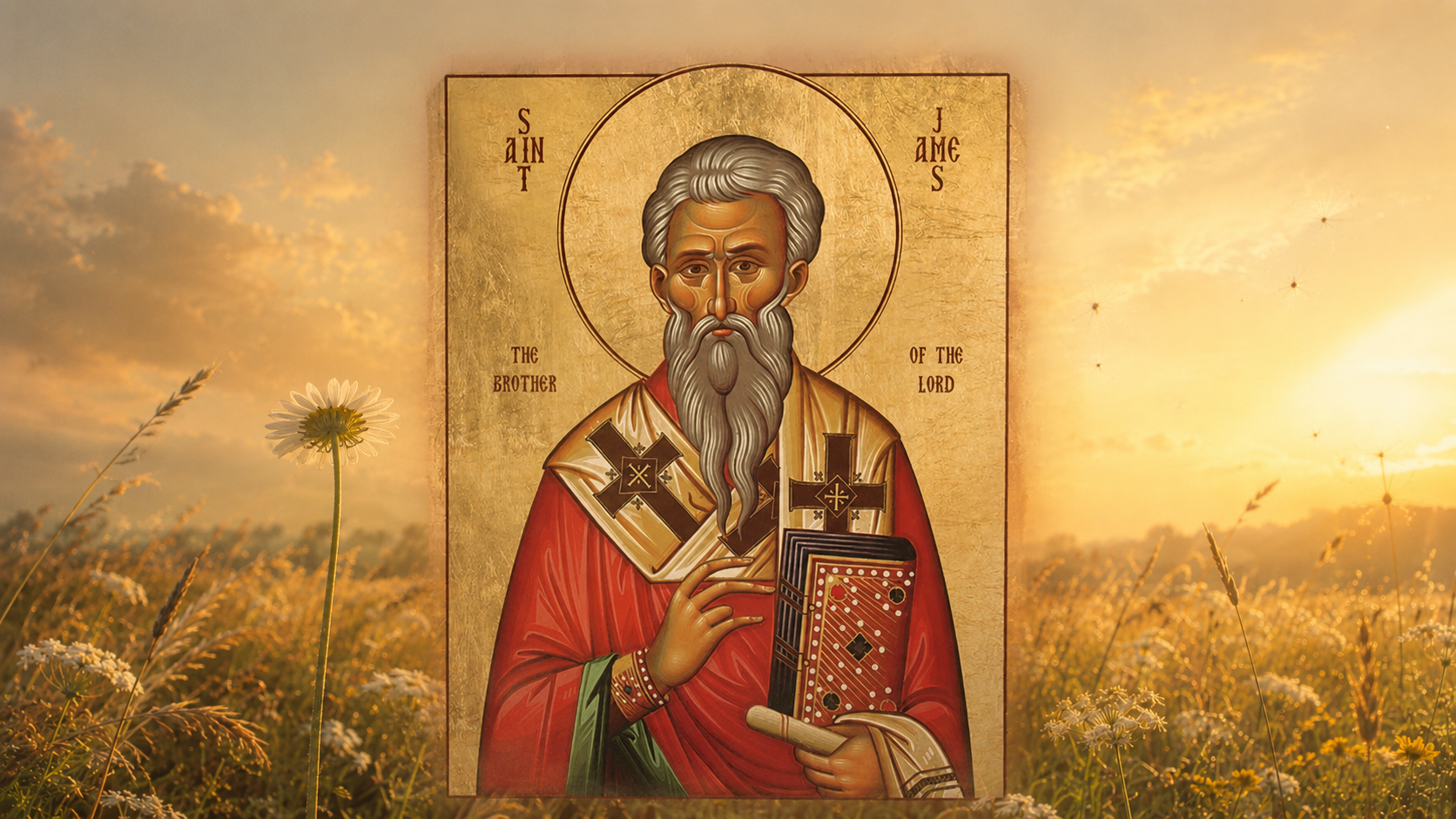
CALL TO WORSHIP | Psalm 37:1-11
Fret not yourself because of evildoers; be not envious of wrongdoers! For they will soon fade like the grass and wither like the green herb. Trust in the Lord, and do good; dwell in the land and befriend faithfulness. Delight yourself in the Lord, and he will give you the desires of your heart. Commit your way to the Lord; trust in him, and he will act. He will bring forth your righteousness as the light, and your justice as the noonday. Be still before the Lord and wait patiently for him; fret not yourself over the one who prospers in his way, over the man who carries out evil devices! Refrain from anger, and forsake wrath! Fret not yourself; it tends only to evil. For the evildoers shall be cut off, but those who wait for the Lord shall inherit the land. In just a little while, the wicked will be no more; though you look carefully at his place, he will not be there. But the meek shall inherit the land and delight themselves in abundant peace.
Song #1 – Sovereign Over Us by Aaron Keys/Michael W. Smith
Song #2 – I Will Be Still by Young Oceans
Dismiss Kids
INTRO |
Thigmomorphogenesis. Thigmomorphogenesis is the phenomenon described in the Letter of James, well, sort of. Thigmomorphogenesis refers to the observed phenomenon in plants in which exposure to “physical disturbances such as wind and touch generally [result in a] reduction in the rate of stem elongation and shoot height, and [an] increase in stem diameter... [When a plant experiences external stimuli, calcium ions and ethylene production [within the plant] are activated, especially at the core and base of the plant.] This response is purely adaptive and allows individual plants to compensate for the different levels of stress that occur in their natural environment. The advantage of this is… stronger plants [that] are less easily damaged by natural mechanical stresses (especially wind) than their… counterparts.”[1]
Essentially, the idea is that if you want sturdier plants, and, as we discussed last week, sturdier people, and thus, by extension, plants and people that reach maturity and the fullness of their purposes (fruitful) potential, you should not shelter them from the disturbances of the natural environment and, to various degrees, induce stresses to ensure their sturdiness
James, in some sense, describes this phenomenon in the life of faith, even arguing that this process is the life of faith. James draws on an old wisdom that holds that when we face disturbances in our natural environment, especially in the context of our relations and responsibilities, something within us, namely faith, is activated and developed so that we might be complete, reaching the end of our potential in God.
Indeed, James contends that life's disturbances help ensure our maturation and completion. God-orchestrated exposure to the trials of making life, good activates and purifies our faith, ensuring we reach our purposed end (telos): the work of God being complete in history through our maturation. And James does not want us to miss out on this process but rather to participate in it with full devotion. Unlike plants, we have a spirited, embodied soul, which means the experience of the process is contingent upon our conscious, willed response to stimuli without and the workings within.
In some ways, I think entering James with this idea helps clarify some of the “debate” around the Letter of James. This debate has historically centered on the apparent tension between James’ exhortation that “a person is justified by works and not by faith alone” (2:24) and Paul’s declaration, “For we hold that one is justified by faith apart from works of the law” (Romans 3:28).
But if James is writing not to describe how we are declared right with God (another issue with James) but rather presumes that fact, and is thus writing to help us see how, being justified, we reach completeness: maturity and perfection, to the glory of God and the good of our neighbor (and the world), then the tension is resolved. All this depends, of course, not only on what James says but also on who he is and who he is addressing.
The author of James, according to the early church and attested throughout history (though not universally), is “James the Lord’s brother” (Galatians 1:19), whom the recently converted Paul met in Jerusalem in Acts 9:26-30. The same James who affirmed and commissed the ruling of the so-called “Jerusalem Council” in Acts 15,
“After they [Paul, Barnabas, and Peter] finished speaking [arguing that ‘we will be saved through the grace of the Lord Jesus, just as they will” (v. 11)], James replied, ‘Brothers, listen to me… my judgment is that we should not trouble those of the Gentiles who turn to God, but should write to them to abstain from things polluted by idols, from sexual immorality, and from what has been strangled, and from blood.” (Acts 15:13-20)
James, Jesus’ brother, like many in the first church, recognized and submitted (became a servant, 1:1) to the reality of the Logos, the Christ and Lord become flesh, only after his resurrection. Yet it was not his relation to Jesus of Nazareth that raised James to leadership in the first church in Jerusalem, but his knowledge of what we now call the Old Testament, coupled with his recognition that Jesus completed (and is completing) the storied history of God’s purposes on earth in and through His people.
And if you remember, the early church was not made up of just Judean (later, Palestinian) Jews but “devout men of every nation under heaven” (Acts 2:5), who, at Pentecost, heard the story of Jesus’ fulfillment of the old stories,
“each in his own native language… Parthians and Medes and Elamites and residents of Mesopotamia, Judea and Cappadocia, Pontus and Asia, Phrygia and Pamphylia, Egypt and the parts of Libya belonging to Cyrene, and visitors from Rome, both Jews and proselytes, Cetans and Arabians [hearing] them telling in [their] own tongues the mighty works of God.” (Acts 2:8-11)
These, along with “about three thousand souls” (Acts 2:41), were baptized into the life of God, who is Father, Son, and Spirit, that day. Many were from Judea, the land of the Hebrews, but many more were “Hellenists” (those in the Greek-speaking/thinking world) who were not. Thus, the need arose for the Hebrew apostles to appoint Hellenistic deacons to care for the Hellenistic widows (those without families) as described in Acts 6:1-6, who were being “neglected in the daily distributions” (Acts 6:1) of all those things the church shared with one another (Acts 4:32-37), those things they had in common so that none who had stayed in Jerusalem to hear the apostles’ teachings about this Jesus whom they now believed in and would be without during their years of stay in Jerusalem (Acts 2:42-17, 4:32-37).
It would be from these Greek-speaking first Christians that the way of Jesus, Christ and Lord, would spread across “the Dispersion” (1:1), leaving Jerusalem “because of the persecution that arose of Stephen [traviling] as far as Phoenicia and Cyprus and Antioch, speaking the word to no one except Jews” (Acts 11:19). This was some two to four years after Pentecost. And some of these, “men from Cyprus and Cyrene… spoke to Hellenists also preaching the Lord Jesus. And the Lord was with them, and a great number who believed turned to the Lord” (Acts 11:20-21). A number of returnees increased in the forthcoming years, and, under the sanctioned persecution of Herod Agrippa I, they found the environment between the ascension and return of Jesus one that required resilience.
It is believed that James, the brother of Jesus, leader of the church in Jerusalem, and one learned in the old ways and committed wholeheartedly to the Way, Truth, and Life in Jesus, writes this letter to his sisters and brothers who had now either returned to their homelands or at least dispersed from Judea. A letter written primarily to Jewish or converted Jews (proselytes) who had spent enough time together under the “prayers and ministry of the word” (Acts 6:4) of the apostles to be grounded in their faith; but who, nevertheless, like you and I, needed encouragement, admonishment even, to let faith do its work in them, as well as wisdom on how to do that amid the disturbances without and within.
Perhaps this is why Luther placed James, along with Hebrews, Jude, and Revelation, as an appendix of sorts in his Bible. While not removing these books from the canon of Scripture, Luther’s less-than-subtle suggestion was that they should be read after the foundations of faith were laid, or they might prove more confusing than helpful.
Nevertheless, if we enter James, like his faith family, as his sisters and brothers who know the foundation of our faith and desire to see the faith complete us (mature and perfect us), then we can see in James his invitation to see that faith at work within us and to participate in that work of faith which makes us sturdy and so able to mature and reach our purposeful and fruitful end.
So, let’s see what James has to show us about faith at work within us. Let’s read James 1:19-27 together, then talk about it.
PRE-SERMON READING | James 1:19-27 (ESV)
Know this, my beloved brothers: let every person be quick to hear, slow to speak, slow to anger; for the anger of man does not produce the righteousness of God. Therefore put away all filthiness and rampant wickedness and receive with meekness the implanted word, which is able to save your souls. But be doers of the word, and not hearers only, deceiving yourselves. For if anyone is a hearer of the word and not a doer, he is like a man who looks intently at his natural face in a mirror. For he looks at himself and goes away and at once forgets what he was like. But the one who looks into the perfect law, the law of liberty, and perseveres, being no hearer who forgets but a doer who acts, he will be blessed in his doing. If anyone thinks he is religious and does not bridle his tongue but deceives his heart, this person’s religion is worthless. Religion that is pure and undefiled before God the Father is this: to visit orphans and widows in their affliction, and to keep oneself unstained from the world.
SERMON | How We Participate With Faith
One of the major critiques of James’ letter is that it lacks continuity and structure. It seems to jump from topic to topic, which, in a sense, follows the proverbial or wisdom literature of old. But my contention is that James does so with a rather specific goal in mind. He desires his brothers and sisters in Christ to let faith do its work, to see faith at work, a work that brings them to full maturity as individuals and brings our life together in Christ to our telos, our purposed end. That is, James, in rather succinct and pointed allusions and admonitions, grounded in the nature of God and the earthiness of daily living, aims to show us how faith completes us.
As we discussed last week, James develops this vision of faith at work in the opening lines, but as you notice in your Bible, there seems to be a hard break between verse 18 and verse 19. Remember, verses and headings were added much later, after the scriptures were circulating, so while they are helpful and thoughtfully placed, they are not necessarily accurate breaks (or, at least, are not to be considered authoritative).
Here, I think, is one example of the need to read through the break to avoid missing the connection.
Verse 18 says,
“Of his [the Father’s] own will he brought us forth by the word of truth [which is?], that we should be a kind of firstfruits of his creatures [which means?].”
Because we are “brought forth,” or “birthed’ (and “born again”) from the will of God, because God desires to bring us into life, including life full and forever, and does so through the Word and His Spirit of Truth, we can ask God (Father, Son & Spirit) for wisdom, believing that God will lead us in accordance with His nature and purposes, which are, our good (v. 5). And so we need not be double-souled, divided because we misunderstand God’s nature (vs. 6-8) or our own (that we want or will settle for something less than what God has for us – v. 13-16).
Implored to see that we persevere (endure) because of the loving will and work of God, how do we “let steadfastness (this preserving life in faith at work) have its full effect, that you may be perfect and complete, lacking nothing” (1:4)?
Verses 19-26, rather than being, as some commentators contend, a proverbial side track, actually begin to bring us into the practicality and participation in the work of faith. Notice all the connections to “the word” in these verses and the expectation of how we respond to faith in this word at work:
v. 19 | “be quick to hear, slow to speak, slow to anger”
Be quick (i.e., prepared or ready) to listen to what? “the word of truth” which speaks life; i.e., the living voice of God (John 14-16)
Slowly speak what and why? Slowly give a definitive statement on our place, purpose, what God is doing, and how, because what comes from our mouth originates in our heart, which is often restless.
Be slow to anger, at what? The circumstances and persons through which you are being developed, growing up; those stimuli through which faith is activated for our maturation and perfection. Anger at God? Why?
v. 20 | “produce the righteousness of God”
Because anger doesn’t produce (firstfruits) right relating to God, ourselves, others, and our earth… because it keeps us from listening and discerning… recognizing what is at work within, “for it is God who works in you, both to will and to work for his good pleasure” (Philippians 2:13) So…
v. 21 | “receive with meekness the implanted word”
Repent. We put away (take off) the old way of relating to God, ourselves, and others, the filthiness or uncleanliness (ways of living not from Wisdom) and “all that remains of wickedness” (NASB), the heart that is “evil from its youth” (Genesis 8:21), and receive (take on) the new, the yoke made for you, in meekness (the heart of Jesus) that saves (brings rest) to the soul (Matthew 11:25-30); for this is the heart that is now yours (planted in the soil of your embodiment – Matthew 13:1-23). How then do you ensure the soil is “good”? Well, obey…
v. 22 | “does of the word, and not hearers only”
Don’t be deceived (vs. 16); you cannot merely affirm what you believe; you have to respond to it; after all, that is how you live… make a life… how we remember who we are and what we are for…
v. 23 | “a hearer of the word and not a doer… looks intently at his natural face in the mirror [what mirror?].”
“looks intently at his natural face in the mirror of Christ…” but only looks at himself in Jesus and then…
v. 24 | “and goes away and at once forgets what he was like [who is he like?].”
who he is working with, whose yoke he shares, who he truly is, and what he is for. Thus, the need for our “scheduled-habits” of work! For,
v. 25 | “But the one who looks into perfect law, the law of liberty and perseveres… no hearer who forgets but a doer who acts [on what?]...will be blessed in his doing.”
Christ, as the law of freedom (the word written on the heart by the Spirit), which always leads us to respond to the life of God in us, with us, and for us, will not always find an easy life, but a blessed (happy, whole) life through his doings (work). Indeed, this is what religion (wisdom) seeks, is it not? So, don’t be one who,
v. 26 | “does not bridle his tongue but deceives his heart”
It is not enough to think we are religious because we see rightly. We have to speak rightly, which comes from listening first and acting in obedience (doers). Any other way is “worthless” religion, worthless attempts to relate to God rightly (as well as to ourselves and others). So, how do we become “doers” of a word?
The action presumes that the word of truth, the living voice of God within us, is leading us, guiding us, commanding us. So we cannot merely listen; we must obey, for only in doing what the word of truth says are we able to remember and live as who we truly are (not forgetfully)… but this is not a law of a slave but of freedom, freedom to be who we are and are made to be in Christ with the Spirit… indeed, this is what religion truly is, a life complete with God, blessed and so, don’t be deceived, take control of your tongue, how you use words to speak of God, of yourself, of others, of what God is doing, for that is the tell-tell sign of the heart, a heart unbridled, unsubmitted, not lowly, and so making all the ways of relating to God of no use.
True religion, life of faith birthed from the word of truth and the work of faith within us (vs. 18), says James,
“Religion that is pure [without admixture] and undefiled [free from that by which the nature of a thing is deformed and debased[2]] before God the Father is this: to visit the orphans and the widows [the lowly (v. 9) & remembering Acts 2-6] in their affliction, and to keep oneself unstained from the world [free from the anti-natural state (vs. 14-15)].” (James 1:27)
So, amid the stressors of making life good, how do we respond to faith at work within us?
We learn to be ready to listen to the living voice of God, to speak slowly (bridle our tongue), to put off the “old” way of responding (anger and lust), and to receive with meekness (the heart of Jesus) what is within us (the word of truth... the life of Christ through the Spirit).
James will work this out in greater and more practical detail throughout the letter. But let us consider whether this encouragement is not only to recognize the working of faith but also to participate in (respond to) faith at work.
REFLECTION |
How am I responding to faith? Am I quick to listen (to what?), slow to speak (a brideled tongue), slow to anger (meek)?
Do I live true to myself in Christ, participating with Christ in the labors of my day, free to be self-giving and free from all that binds?
What would tomorrow look like if I responded to faith, and lived true?
CORPORATE CONFESSION & COMMUNION[3] |
(Celebrant)
The table is ready,
here waiting for your arrival.
It is the table of company with Jesus,
and all who love him.
It is the table of sharing,
with the poor of the world,
with who Jesus identified himself.
It is the table of communion with the earth
in which Christ became incarnate.
So come to this table,
you have much faith
and you who would like to have more;
you who have been here often
and you who have not been for a long time;
and you who have tried to follow Jesus,
and you who have failed;
come.
It is Christ who invites us to meet him here; on the day made for us, at the table he prepared for us.
Invite People to the Table to Receive the Communion elements
(ALL)
Loving God,
through your goodness
we have this bread and juice to offer
which has come forth from the earth
and human hands have made.
May we know your presence
in this sharing,
so that we may know your touch
and presence in all things.
We celebrate the life that Jesus has shared
among his family of faith through the centuries,
and shares with us now.
Made one in Christ
and one with each other,
we offer these gifts
and with them ourselves,
a single living act of praise.
Amen.
Song #3 – Joy to Be by Citizens
Song #4 – Psalm 46 by Bifrost Arts
BENEDICTION | James 5:7-8
As we rest in the day made for us, we prepare to enter into the work for which we are made [LIGHT THE CANDLE], remembering to…
Be patient, therefore, brothers and sisters, until the coming of the Lord.
See how the farmer waits for the precious fruit of the earth, being patient about it, until it receives the early and the late rains.
You also, be patient.
Establish your hearts, for the coming of the Lord is at hand.