
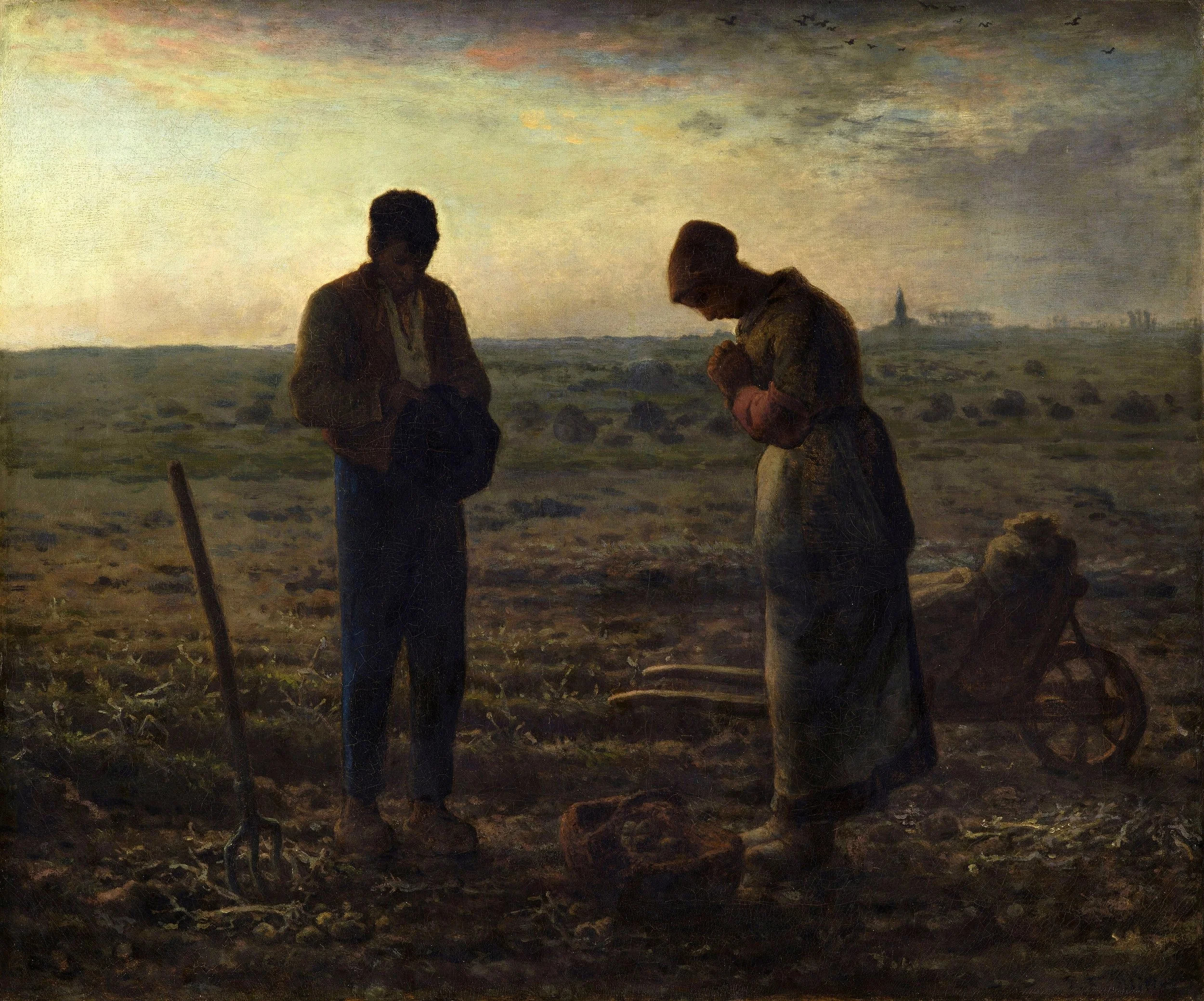
CALL TO WORSHIP | Psalm 27:4-6, 13-14
I'm asking GOD for one thing, only one thing:
To live with him in his house my whole life long.
I'll contemplate his beauty; I'll study at his feet.
That's the only quiet, secure place in a noisy world,
The perfect getaway, far from the buzz of traffic.
God holds me head and shoulders above all who try to pull me down.
I'm headed for his place to offer anthems that will raise the roof!
Already I'm singing God-songs; I'm making music to GOD…
I am sure now that I shall look upon GOD's goodness in the land of the living!
Stay with GOD! Take heart. Don’t quit. I will say it again: Stay with GOD.
Song #1 – I Believe by Jonathon and Melissa Hesler
Song #2 – My Heart Alone by
Dismiss Kids
INTRO
What if we believed that all the adversaries of our souls (within and without) have been destroyed by the finished work of Jesus on the cross? What if we believed that we are not alone, not meant just to figure life out, not left to wander through our days, but shown, taught, and guided into God’s profound design and destiny with Jesus, alive again and forever? What would such a life look like?
In many ways, “such a life” is what we are encouraged to envision after Easter. A life that is as much a return to something (a resurrection of something) as it is experienced as new in our now.
We said our after-Easter life starts where all life began and is renewed, in a Sabbath, resting with God in His finished work. From within a place of peace, “the very good” of what God has already done, and from within time in which striving has ceased, comes our call to work, to join in what God does as participation in life good with God. Our good work comes from resting in God’s finished work. It did so in Genesis and does so in Jesus.
Over the years, our faith family has used this time after Easter to help one another reenter the whole and holy rhythm of the ordinary: Sabbathing into work and working into Sabbath. A rhythm of life resurrected even as we live resurrected lives.
At the heart of the matter, we believe we are made and remade to participate in the fullness of our days on earth by resting with God in His finished work and by joining with God in His continued work to bring goodness, wholeness, and holiness amid the struggles of being and becoming human. Sabbath and Work, rest and responsibility in relationship, are what make life.
“How we spend our days,” contends Annie Dillard, “is, of course, how we spend our lives. What we do with this hour, and that one, is what we are doing.” To me, the weight of this simple observation about reality is the energy propelling Paul’s exhortation in Ephesians 2. Let’s read it together:
PRE-SERMON READING |Ephesians 2:1-10
It wasn’t so long ago that you were mired in that old stagnant life of sin.
You let the world, which doesn’t know the first thing about living, tell you how to live. You filled your lungs with polluted unbelief, and then exhaled disobedience.
We all did it, all of us doing what we felt like doing, when we felt like doing it, all of us in the same boat. It’s a wonder God didn’t lose his temper and do away with the whole lot of us.
Instead, immense in mercy and with an incredible love, God embraced us. He took our sin-dead lives and made us alive in Christ. He did all this on his own, with no help from us! Then he picked us up and set us down in highest heaven in company with Jesus, our Messiah.
Now God has us where he wants us, with all the time in this world and the next to shower grace and kindness upon us in Christ Jesus. Saving is all his idea, and all his work. All we do is trust him enough to let him do it. It’s God’s gift from start to finish!
We don’t play the major role. If we did, we’d probably go around bragging that we’d done the whole thing!
No, we neither make nor save ourselves. God does both the making and saving. He creates each of us by Christ Jesus to join him in the work he does, the good work he has gotten ready for us to do, work we had better be doing.
SERMON | Getting The Good Out of Work
I know I have told this story before, so forgive the redundancy. I know, too, that you know our family is “Disney people.” We really do enjoy our time together in that “happiest place on earth.” We also know we are being economically exploited by the men and machines behind the fantastical façade. So at least we enjoy it, honestly!
While my skeptical and somewhat thoughtful self can overcome much of the two-sidedness of what we experience in this earthly kingdom’s magic and just have fun with the family, there is one particular “experience” that rakes my soul: The Carousel of Progress.
The Carousel of Progress was originally created for the New York World’s Fair in 1964 and later moved to Disney World in Orlando as a permanent exhibit. It’s a nearly ten-minute animatronic journey through humanity’s past, its present (at that moment), and our future. As the attraction’s title conveys, the unfolding scenes tell a story of progress, of humanity overcoming its environment, its limitations, and even itself, as we become happier and more fulfilled to the same measure that we become more efficient at harnessing the power of the mind and body, specifically in regard to our mastery of technologies.
While the story of a happier life through technological advancement was neither created by Walt Disney nor is he, nor those who followed, the sole proprietors of such a view of living, the striking, unsettling, and, as Deedra will tell you, the thing that makes me hate the, ironically named, Carousel (or merry-go-round) of Progress is the presumption that life is better with technology because it gets us out of work.
That’s right. Every advancement is a step toward doing less as a human, becoming more and more a consumer at leisure, not to think deeply or give of oneself more freely, but rather to be entertained. The story that unfolds as our seats rotate around the circle of life’s past, present, and future is that work is not our good, that work is something we should get out of, and that work is a part of life that needs to be advanced beyond to experience the good life. Though again, we end up where we started, which is nowhere!
This vision of the good life, achieved by working our way out of work, has permeated the cellular substrate of our society and culture. Not a single one of us is immune to its cancerous incursion. Our vision of the good and the means of achieving it have been twisted in their very nature.
And yet, contrary to our technological aspirations to lift us beyond the dirt of daily effort, and in contrast to our cultural emphasis and societal pressures to liberate us from our labor, we have come to see in our Scripture that work is an integral aspect of being truly human. Work is not a curse to be broken, an illness to be cured, an obstacle to overcome, or even an unfortunate necessity to just get through.
Instead, the testimony of our faith is that our daily, ordinary work, whatever it is, whether it is our livelihood, duty, or pleasure, or some combination, is “the joyful privilege of contributing to the work” that God started, the good and very good work God continues to do, and which He has crafted us to participate in with Him.
For we are God’s workmanship, created in Christ Jesus for good works, which God prepared beforehand, that we should walk in them. (Ephesians 2:10, ESV)
He creates each of us by Christ Jesus to join him in the work he does, the good work he has gotten ready for us to do, work we had better be doing. (Ephesians 2:10, MSG)
We are crafted to participate in something good. We are fashioned to contribute and expected by God, to do so. It is our nature, made in our Maker’s image and restored by the same Beginner (ing), to work. In other words, our daily, ordinary work with God (in Christ) is the good in which we are made.
Work is not a means to getting somewhere or getting to something good; it is our participation in what is already good: Life in Christ. To not work, or to not see the roles and responsibilities in our daily living as good work with God, is to live a diminished life, not an elevated or privileged one. The chief end of humanity is not, not-to-work, but to flourish where we are planted:
“planted in the house of the LORD; they flourish in the courts of our God…still bear fruit in old age…ever full of sap and green” (Psalm 92:13- 14)
Bearing the fruit of life with God in every age and season, not merely in some future existence, but as the psalmist sings, in the land of the living.
“I am sure now that I shall look upon GOD's goodness in the land of the living!” (Psalm 27:13)
And so, Dorothy Sayers, the English novelist, playwright, and social commentator whose company included the likes of G.K. Chesterton, C.S. Lewis, and T.S. Eliot, can contend, challenging our accultured notion of work and twisted versions of good, that:
“…work is not, primarily, a thing one does to live, but the thing one lives to do. It is, or it should be, the full expression of the worker’s faculties, the thing in which he [or she] finds spiritual, mental, and bodily satisfaction, and the medium in which he [or she] offers [them]self to God.”[1]
Sayers goes on to point out the issue we face in such “work from the soul” (Col. 3:23).
“We have all got it fixed in our heads that the proper end of work is to be paid for—to produce a return in profits or payments to the worker which fully or more than compensates for the effort [they] put into it. But if our proposition is true, this does not follow at all.”[2]
How could it? If the end of work is some monetary or object of value, some-thing to be used or hoarded, then work could only be what you get paid for (which we have already argued is not the case), and such work would only be good if the compensation did indeed provide what was missing in the work. But, as Sayers continues, if,
“…work is the measure of [the worker’s] life, and [his/her] satisfaction is found in the fulfillment of [his/her] own nature, and in contemplation of the perfection of [his/her] work,” then, “His [or her] satisfaction comes, in the god-like manner, from looking upon what [they have] made and finding it very good. He [or she] is no longer bargaining with his [or her] work, but serving it.”[3]
Let that sink in for a moment. Sayers is not saying that we do not need resources to survive. Nor is she arguing that such resources may not be a product of our labor. What she is saying is that if we see work as a means to living, rather than as living itself, something we do for something else rather than something we do because of who we are, we will be in constant struggle, a bartering, a wrestle for life rather than a servant of life.
Hear one last thought from Sayers on the matter,
“It is when work has to be looked on as a means to gain that it becomes hateful; for then, instead of a friend, it becomes an enemy from whom tolls and contributions have to be extracted. What most of us demand from [work] is that we should always get out of it a little more than the value of the labor we give to it. By this process, we persuade ourselves that [work] is always in our debt—a conviction that not only piles up actual financial burdens, but leaves us with a grudge against [work].”[4]
The way we think about work, relate to work, as a means to live rather than as living itself, begrudges us to life, good. Work as income, as primarily a relation to mammon (Matt. 6:24) rather than as the good of our nature, keeps us trying to get out of work, rather than getting out of work, life in Christ.
The good thing about this is that such a view of reality means that the amplest and most fertile soil from which to be human, truly, and good is the very place, the very life—roles, responsibilities, relationships, which God has planted you to “work and keep” to cultivate and care for flourishing in the good with Him. That is why, as Sayers so boldly states, “The only Christian work is good work well done.”[5] But, do we believe it?
REFLECTION
[ON-STAGE SCREEN] “…work is not, primarily, a thing one does to live, but the thing one lives to do. It is, or it should be…the thing in which they find spiritual, mental, and bodily satisfaction, and the medium in which they offer themself to God.”
Consider & Attend
Do you believe this? What keeps you from believing this?
What would be different tomorrow, if you entered your work not as something done to make a living, but something you are living to do?
Where have you seen the goodness of someone “serving” work rather than “bargaining” with it?
CORPORATE CONFESSION & COMMUNION[6]
By your ever-restful grace,
allow us to enter your Sabbath rest
as your Sabbath rest enters into us.
For...
Jesus has done good work for us.
The Holy Spirit is doing a good work in us.
And God our Father equips and calls each of us to go out and do good works, works he has prepared in advance for us to do, and that he alone,
by his power and his Spirit,
will bring to completion through us.
For all the promises of God find their Yes in Jesus.
That is why it is through Jesus we utter our Amen
to God for his glory.
Hallelujah! Amen.
Song #3 – Simple Kingdom by Brian / Katie Torwalt
Song #4 – Love You More by Harvest
BENEDICTION | 1 Thesselonians 4:11-12
As we rest in the day made for us, we prepare to enter into the work for which we are made [LIGHT THE CANDLE], praising and praying:
Aspire to live quietly, resting from the labor that is not yours, attending to the work made for you. You’ve heard all this from us before, but a reminder never hurts. We want you living in a way that will command the respect of outsiders, able to live dependent on no one.